Sony ZV-1F Vlogging Camera Review 2026: Is This Still Worth It?
The Sony ZV-1F landed as a budget friendly entry into Sony’s vlogging lineup, and three years later it still holds a strong spot for new creators. This compact camera packs a wide 20mm lens, a 1 inch sensor, and clever vlogging features into a body that fits in your jacket pocket.
If you are starting a YouTube channel, posting daily TikTok clips, or filming travel diaries, you have likely seen this little black box pop up on every recommendation list.
In this review, I tested the ZV-1F in 2026 against newer rivals to see if Sony’s beginner vlog cam still earns its price tag. I checked the video quality, the autofocus, the audio, the battery, and the overall feel during real shooting days.
By the end of this post, you will know exactly who should buy this camera and who should skip it for something newer. Let’s get into the full breakdown.
In a Nutshell
- Built for beginner vloggers: The ZV-1F has a fixed 20mm F2 lens, a flip out screen, and a one button background defocus toggle that makes it dead simple for first time creators.
- 4K video with a catch: It records 4K at 30p and 24p, but there is a small crop and no in body stabilization, so handheld footage needs the Active SteadyShot mode.
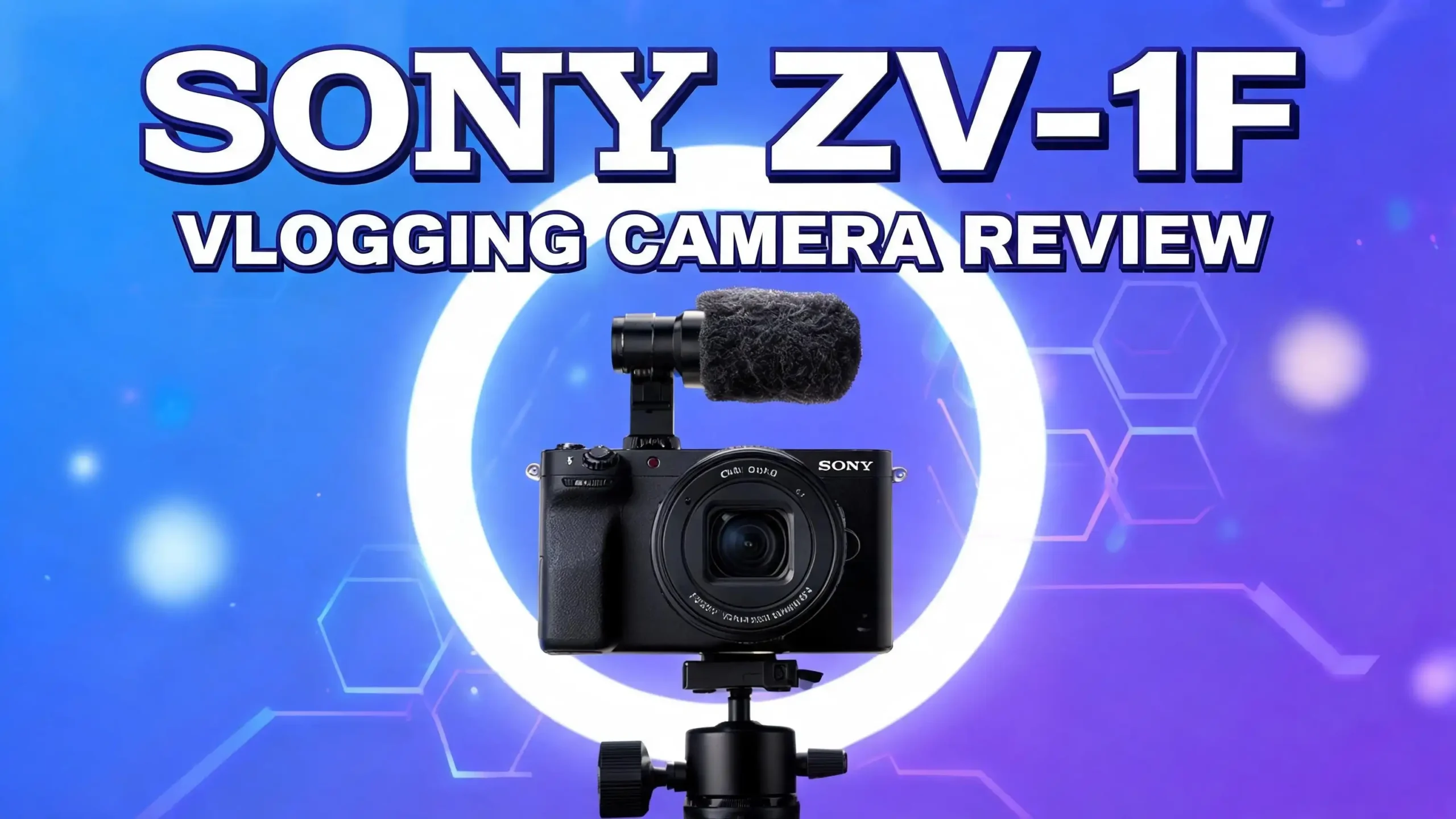
- Smart audio out of the box: The built in directional 3 capsule mic and included wind muff give clean voice audio without an external microphone.
- Contrast autofocus only: Unlike the pricier ZV-1 II, this model uses contrast detection only, which works fine for faces but can hunt in low light.
- Strong value at the 2026 price: With street prices around $498, the ZV-1F sits well below the ZV-1 II and ZV-E10 II while still giving you a 1 inch sensor.
- Best fit: New creators, students, and travel vloggers who want a true point and shoot vlog cam without lens swaps or a learning curve.
Sony ZV-1F Quick Overview and Who It Is For

- Ultra-wide 20mm lens gets it all in the frame, even at arm’s length
- Large 1” sensor and F2 lens, for low-light and defocusing backgrounds
Last update on 2026-09-11 / Affiliate links / Images from Amazon Product Advertising API
The Sony ZV-1F is a fixed lens compact camera built only for content creators. Sony released it in late 2022 as the cheapest model in the ZV family. The body weighs only 256 grams, so it slips into a small bag with ease.
The camera targets people who film themselves at arm’s length. The 20mm wide lens fits your face and the background in the same frame, even when you hold the camera close. The side flip screen lets you frame your shot while you talk.
This is not a hybrid stills camera. You can take photos, but the lens does not zoom and the sensor is small compared to a mirrorless body. Sony wants this camera in the hands of YouTube starters, TikTok creators, and travel bloggers who hate fiddling with settings.
If you already own a phone with a good camera, the ZV-1F earns its spot through better audio, a real lens, and dedicated video controls. It is the bridge between a smartphone and a proper mirrorless setup.
Design and Build Quality in 2026
The ZV-1F has a clean, plastic body with a soft matte finish. It looks similar to the older ZV-1 but feels lighter in hand. The grip is small, so creators with larger hands may want to add a small handle or tripod grip.
The top plate holds the shutter button, the zoom rocker for digital crop, the power switch, and a dedicated red record button. A small MOVIE button sits next to the C1 custom key. The mode dial offers three modes: Photo, Video, and Slow & Quick.
The side flip out screen rotates a full 180 degrees. This is the main reason vloggers love this camera. You can see yourself, check focus, and adjust framing in real time. The screen is touch enabled, which makes menu navigation quick.
Build quality feels solid for the price, though it is not weather sealed. I would not film in heavy rain without a cover. The included furry wind muff clips onto the hot shoe and blocks wind noise on outdoor shoots. Overall, the camera survives daily creator life without complaint.
Image Sensor and Photo Performance
Inside the ZV-1F sits a 20.1 megapixel 1 inch stacked BSI CMOS sensor. This is the same sensor size as the older ZV-1, and it is much larger than the tiny sensors in phones or basic point and shoots. A bigger sensor means better low light shots and a more natural background blur.
The fixed 20mm equivalent F2 lens captures wide scenes with good sharpness in the center. The corners soften a little, which is normal for a wide compact lens. Colors come out vibrant but accurate, with Sony’s usual warm skin tones.
In daylight, photos look clean and ready to post. ISO 100 to 800 stays noise free. Above ISO 1600, grain starts to show, but the JPEG processing smooths it well enough for social media. RAW shooters get more room to edit shadows.
The lens does not zoom optically, so you cannot zoom in on faraway subjects. You can use the digital Clear Image Zoom, which keeps detail well up to about 2x. For everyday casual photos and travel snaps, image quality is very respectable.
Top 3 Alternatives for Sony ZV-1F
If the ZV-1F does not match your needs, here are three strong picks worth checking before you buy.

- Ultra-wide 18-50mm1 zoom lens gets it all in the frame
- Large 1.0-type sensor for professional results even in low-light

Last update on 2026-10-26 / Affiliate links / Images from Amazon Product Advertising API

- Capture Stunning Footage - Osmo Pocket 3 vlogging camera features a 1-inch CMOS sensor and records...
- Effortlessly Frame Your Shots - Get the ideal composition with Osmo Pocket 3's expansive 2-inch...
Last update on 2026-10-26 / Affiliate links / Images from Amazon Product Advertising API

- Compact Powerhouse: Canon PowerShot V10 vlogging camera features a sleek, pocket-sized design...
- Versatile Vlogging Camera: Incredible low-light capabilities with a 15.2-megapixel 1-inch...
Last update on 2026-10-26 / Affiliate links / Images from Amazon Product Advertising API
The Sony ZV-1 II gives you a flexible 18 to 50mm zoom, phase detect autofocus, and better low light performance. It costs more, but you gain a real zoom range and faster focus tracking for moving subjects.
The DJI Osmo Pocket 3 stands out with a built in 3 axis gimbal and a rotating 1 inch sensor module. It is the best pick for walking vlogs where smooth footage matters more than wide angle framing. The 4K at 120fps slow motion is also a big plus.
The Canon PowerShot V10 keeps things even simpler with a kick stand design built right into the body. It costs less than the ZV-1F and works well for desk based creators who film at home.
4K Video Quality and Recording Modes
Video is the main reason to buy this camera. The ZV-1F records 4K up to 30p using full pixel readout with a slight crop. The footage looks sharp, with strong detail and pleasing color science straight from the camera.
You can shoot Full HD at 120 frames per second for smooth slow motion. The 1080p quality is clean and good for social platforms that still favor vertical HD clips. The bit rate maxes out at 100 Mbps in 4K, which is fine for online delivery.
Sony includes the S&Q mode for quick slow motion and time lapse clips. There is no S-Log or HLG flat color profile though, so colorists looking to grade footage heavily should look elsewhere. The standard and vivid color profiles cover most casual creator needs.
One small note: 4K recording is capped at 5 minutes per clip in some heat conditions, though most users never hit that limit. For daily vlogging at 1080p or 4K 30p, the camera handles long takes without issue.
Autofocus, Face Tracking, and Eye AF
The autofocus system uses contrast detection only, with no phase detect pixels. This is the biggest spec compromise compared to the ZV-1 II. Despite that, the face and eye AF works well for vlogging.
When you point the camera at yourself, it locks onto your eye fast and stays there. Sony’s Real Time Eye AF for human subjects is included, and it tracks faces even when you move side to side. For seated vlogs or talking head clips, focus stays sharp.
In low light, the system slows down. You may notice a small focus hunt when light drops below typical living room levels. Fast moving subjects like pets or kids running can also trip the system since contrast AF is not the quickest.
The Product Showcase mode is a standout feature. Hold up any item near the lens, and the camera shifts focus from your face to the product instantly. Reviewers and unboxing creators love this. The Background Defocus button also flips between sharp and blurred backgrounds with one press.
Built In Microphone and Audio Quality
Audio is where the ZV-1F surprises people. The camera has a 3 capsule directional microphone mounted on top, aimed forward to pick up your voice clearly. Sony tuned it for vloggers, so it cuts out side and rear noise.
The included furry wind screen clips onto the hot shoe and blocks wind rumble on outdoor shoots. I tested it on a windy beach walk, and the audio came through usable without an external mic. That is rare for a camera at this price.
If you want even better sound, the camera has a 3.5mm microphone input for any external mic. It also supports Sony’s Multi Interface Shoe for digital audio from compatible Sony mics like the ECM-B10 or ECM-G1. You do not need extra cables in that setup.
There is no headphone jack, which is the main audio limit. You cannot monitor sound live with wired headphones. For casual creators, the built in mic plus the wind muff handles 90 percent of shoots without trouble.
Stabilization for Handheld Vlogging
The ZV-1F has no in body image stabilization. This is one of the bigger trade offs at this price. Sony relies on digital stabilization called Active SteadyShot mode, which crops the frame and smooths motion in software.
In Standard mode, walking footage looks a little shaky. In Active mode, the crop tightens by about 1.3x but the footage smooths out enough for casual walking shots. It is not gimbal smooth, but it works for vlogs filmed mostly while standing.
For running, hiking, or fast motion, you will see visible bounce even with Active on. If you want truly stable handheld footage, pair the camera with a small gimbal or pick the DJI Osmo Pocket 3 instead.
The good news is that for static and seated vlogs, you do not need any stabilization. Place the camera on a small tripod or hold it at arm’s length, and the image stays steady. Most creators film this way anyway, so the missing IBIS is not a deal breaker for everyone.
Battery Life and Storage
The ZV-1F uses the small NP-BX1 battery, which is the same battery as older Sony compacts. A full charge gives you about 60 minutes of 4K recording or roughly 90 minutes of 1080p. That number drops with active stabilization on or in cold weather.
Most creators carry two or three spare batteries for a full day of shooting. They are cheap and easy to swap. Sony also supports USB Type C charging and USB power delivery, so you can plug the camera into a power bank and film while it charges.
The camera uses a single SD card slot that supports UHS-I cards. A 64GB or 128GB card covers most days. 4K footage at 100 Mbps eats about 750MB per minute, so plan storage based on how much you shoot.
The USB C port also doubles as a live streaming output through UVC and UAC support. You can plug the camera directly into a laptop and use it as a high quality webcam. No capture card needed.
Connectivity, App, and Live Streaming
The ZV-1F includes Wi Fi and Bluetooth for transferring photos and clips to your phone. The free Creators’ App from Sony replaces the older Imaging Edge app and works much better. Pairing is fast, and downloads to your phone happen in the background.
You can also control the camera remotely from your phone. This is helpful when you set the camera on a tripod and want to start or stop recording from a distance. The live view feed is smooth enough for framing.
The USB C port turns the camera into a plug and play webcam for Zoom, OBS, Streamlabs, or any streaming app. The image quality blows past any built in laptop webcam. Streamers and remote workers use this feature daily.
There is no HDMI output to a monitor, only a micro HDMI port for basic playback. For advanced video setups, this can be a limit. For solo creators uploading to social platforms, the wireless and USB workflow covers almost every need.
Pros and Cons of the Sony ZV-1F in 2026
Here is the honest balance after months of shooting with this camera.
The pros include a large 1 inch sensor in a tiny body, a wide 20mm lens that frames your face well, a strong built in directional microphone, and a flip out touch screen. The Product Showcase mode and Background Defocus button speed up creator workflows. The price is also very competitive in 2026.
The cons are also clear. The camera uses contrast only autofocus, which lags behind the phase detect system in the ZV-1 II. There is no zoom lens, no in body stabilization, no headphone jack, and the battery life is short. The lack of S-Log limits color grading.
For first time creators, the pros easily outweigh the cons. The camera does what it promises with minimal setup. For advanced shooters who already understand cameras, the missing features push you to step up to the ZV-1 II or ZV-E10 II for a better long term tool.
Think of the ZV-1F as a focused tool, not an all purpose camera. When you match it with the right use case, it shines.
Sony ZV-1F vs ZV-1 II vs ZV-E10 II
Sony’s vlog lineup confuses many buyers, so here is the quick split. The ZV-1F is the entry model with a fixed 20mm lens and contrast AF. It is the cheapest and the easiest to use.
The ZV-1 II adds a zoom lens from 18mm to 50mm, phase detect autofocus, S-Log color profiles, and faster processing. It costs about $300 more than the ZV-1F. For creators who film a mix of wide vlogs and tighter shots, it is the better long term pick.
The ZV-E10 II moves into mirrorless territory with an APS-C sensor and swappable lenses. Image quality jumps significantly, and you can grow your lens kit over time. It is bigger, heavier, and more expensive.
Pick the ZV-1F if you want simple, pocket sized, and cheap. Pick the ZV-1 II for the best fixed lens vlog cam Sony makes. Pick the ZV-E10 II if you plan to grow into more serious video work over the next few years.
Real World Use Cases for the ZV-1F
I tested the ZV-1F across several creator scenarios to see where it fits best. For seated YouTube videos, it works perfectly. The wide lens captures your upper body and the room behind you, and the mic picks up clean voice audio.
For travel vlogging, the small size wins. I carried it in a jacket pocket for a full day of walking, and it never felt heavy. Wide outdoor shots looked great, and the Active SteadyShot kept casual walking clips watchable.
For product reviews and unboxings, the Product Showcase mode shines. The focus shift from face to object happens instantly and looks professional. Tech reviewers and beauty creators get a big workflow benefit here.
For streaming and webcam use, the USB C plug and play setup beats any built in laptop camera. Remote workers and gamers can use this camera as a full time webcam upgrade. The image looks broadcast quality compared to a normal webcam.
Is the Sony ZV-1F Worth Buying in 2026?
After all the testing, my honest take is yes, with one condition. The ZV-1F is worth it for beginner creators who want a real camera without the steep learning curve. The price has dropped since launch, and the included features cover most starter needs.
If you already own a recent flagship smartphone, the gap is smaller than it used to be. Phones now record clean 4K and have great mics. But the ZV-1F still gives you a true wide lens, a better directional mic, and a dedicated form factor that keeps you focused on filming, not scrolling.
For intermediate creators who want to grow, I suggest spending a bit more on the ZV-1 II for the zoom lens and phase detect autofocus. The longer feature life is worth the extra cost.
If you want the simplest, cheapest real vlogging camera in 2026 and you film mostly seated or arm’s length content, the ZV-1F still deserves a spot in your cart. It does one job and does it well.
Frequently Asked Questions
Does the Sony ZV-1F shoot 4K video?
Yes, the ZV-1F records 4K video at 30p and 24p with full pixel readout. The footage uses 8 bit 4:2:0 color at up to 100 Mbps. There is no 4K 60p option, so fast action looks smoother in the 1080p 120fps slow motion mode.
Is the Sony ZV-1F good for beginners?
Yes, the camera was built for beginners. The fixed lens removes lens choice stress, the auto modes work well, and the one button Background Defocus and Product Showcase features speed up creator workflows. You can pull it out of the box and start filming in under five minutes.
Does the Sony ZV-1F have image stabilization?
The ZV-1F does not have in body image stabilization. It uses digital stabilization called Active SteadyShot, which crops the frame and smooths motion in software. Walking shots look reasonable, but running or fast motion footage still shows visible shake.
Can I use the Sony ZV-1F as a webcam?
Yes, the camera works as a USB webcam right out of the box. Plug it into your laptop with a USB C cable, and apps like Zoom, OBS, and Streamlabs recognize it as a video and audio source. No capture card or extra software is needed.
How long does the Sony ZV-1F battery last?
A full NP-BX1 battery lasts about 60 minutes of 4K recording or 90 minutes of 1080p. Most creators carry two or three spare batteries for a full shooting day. The camera also charges over USB C and can record while plugged into a power bank.
What is the difference between the Sony ZV-1F and ZV-1 II?
The ZV-1F has a fixed 20mm F2 lens and contrast only autofocus. The ZV-1 II has an 18 to 50mm zoom lens, phase detect autofocus, and S-Log color profiles. The ZV-1 II costs about $300 more and is the better long term pick for serious creators.
Does the Sony ZV-1F have a headphone jack?
No, the ZV-1F does not include a headphone jack. You cannot monitor audio live with wired headphones. It does have a 3.5mm microphone input and a Multi Interface Shoe for external mics, so audio input options remain flexible.

Hi, I’m Kate! As a tech journalist and gadget enthusiast, I’ve been exploring the intersection of artificial intelligence and consumer technology for over a decade. My passion lies in translating complex tech concepts into practical insights that actually matter to real people.