
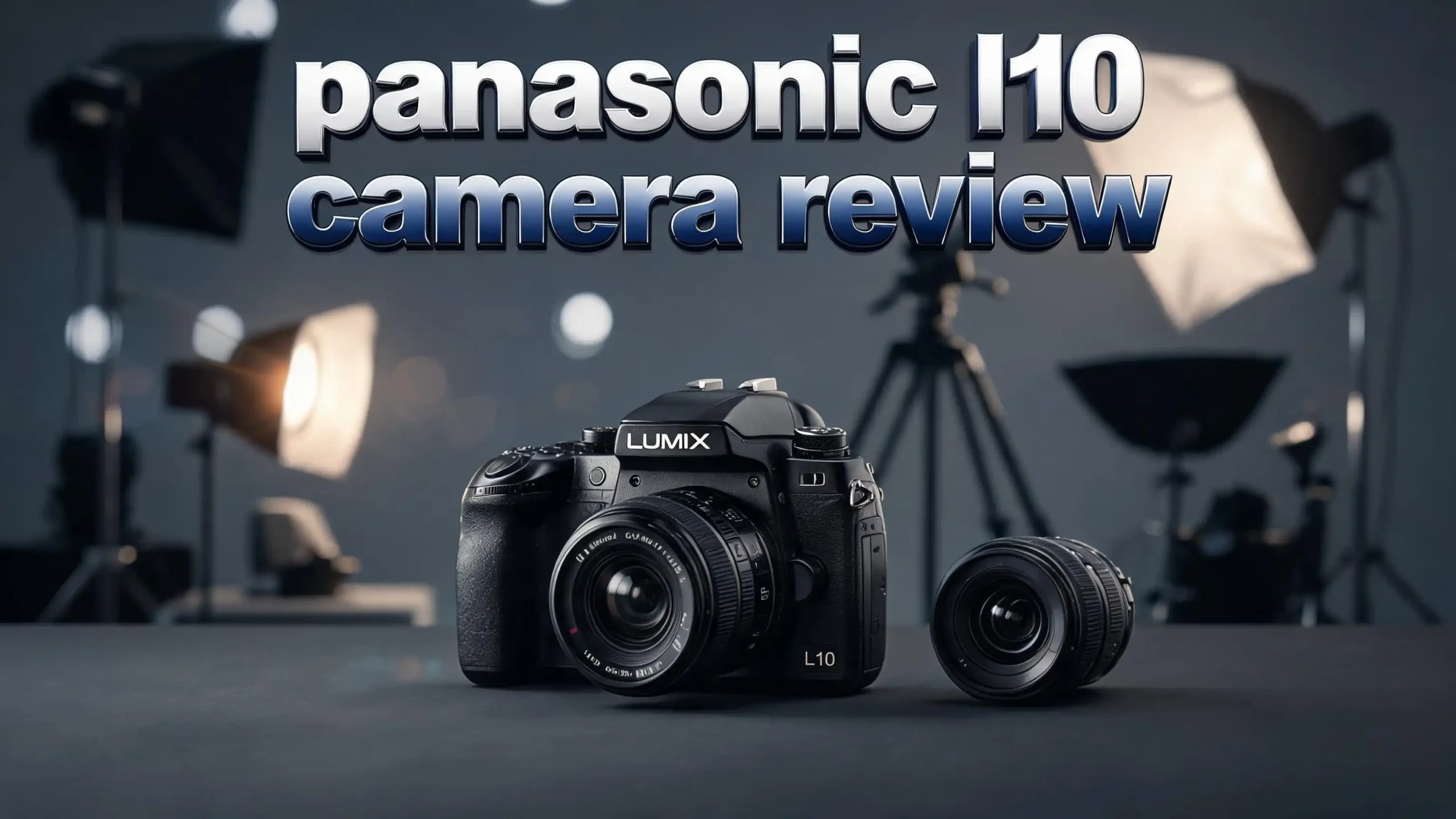
Panasonic L10 Camera Review 2026: Is This Compact Lumix Worth $1,499?
The Panasonic Lumix L10 arrived in 2026 and gave compact camera fans something to celebrate. Panasonic released it to mark 25 years of the Lumix brand. People wanted a stylish, pocket friendly camera with real power, and the L10 answers that call.
This camera mixes a sharp Leica zoom lens, a large sensor, and a classic design into one neat body. It targets street photographers, travelers, and everyday shooters who want better photos than a phone can give.
In this review, you will learn what the L10 does well, where it falls short, and who should buy it. You will also see the key specs, sample strengths, and the best alternatives. By the end, you will know if the Lumix L10 deserves a spot in your bag. Let us start with the quick facts that matter most.
Key Takeaways
- The L10 carries a 20.4MP Four Thirds BSI sensor and a sharp Leica 24 to 75mm f/1.7 to 2.8 zoom lens for clear, rich images.
- It uses the same sensor and processor from the Lumix GH7, so image quality and color science feel modern and premium.
- The camera weighs about 508 grams and features a metal body with a saffiano leather texture, an OLED viewfinder, and a flip out touchscreen.
- Phase Hybrid autofocus with 779 focus points and AI subject detection helps you lock onto faces, eyes, and moving subjects.
- The price sits at $1,499, which feels high but fair for a stylish compact with a zoom lens and an EVF.
- The L10 is not a true video camera, since it lacks IBIS and a headphone jack, but it shoots great B roll footage.
What Is the Panasonic Lumix L10?

- Ultra-Fast Connection and Transfer: Transfer content to your smartphone seamlessly with LUMIX Lab...
- Think Big, Pack Small: Compact camera packed with professional-grade features; the perfect everyday...

Last update on 2026-10-25 / Affiliate links / Images from Amazon Product Advertising API
The Panasonic Lumix L10 is a premium fixed lens compact camera that Panasonic launched in May 2026. The company built it to celebrate 25 years of the Lumix name. It serves as a spiritual successor to the much loved LX100 series. Panasonic chose not to keep the LX100 name, but the L10 borrows the best ideas from that older line.
The L10 packs a large Four Thirds sensor and a built in Leica DC Vario Summilux 24 to 75mm lens. This setup gives you a full frame equivalent zoom range with a bright f/1.7 to 2.8 aperture. You get a versatile zoom instead of a single fixed prime, which sets it apart from rivals like the Ricoh GR IV.
Panasonic designed this camera for street, travel, and everyday photography. It feels instinctive in the hand and lets you focus on your subject. The body uses a high quality metal exterior with a magnesium alloy front case. A signature leather texture finish gives it a classic look.
The L10 comes in three colors: Black, Silver, and a limited Titanium Gold Special Edition. The gold version adds exclusive extras for a $100 premium. These extras include a matching auto lens cap, a leather strap, and a lens cloth. This camera aims at people who want more muscle than a basic point and shoot offers.
Panasonic Lumix L10 Key Specifications
The spec sheet tells you a lot about what this camera can do. The Lumix L10 mixes proven Panasonic parts with a fresh design. Here is a clear look at the most important numbers and features that shape your shooting experience.
The camera uses a 20.4MP Four Thirds back illuminated CMOS sensor. This is the same sensor found in the Lumix GH7, which is a strong performer. The processor is modern and helps with fast handling and clean color. Dynamic Range Boost adds extra shadow detail in your still photos.
The lens is a Leica 24 to 75mm f/1.7 to 2.8 zoom. It has a metal barrel, a manual aperture ring, and a macro mode that focuses as close as 3cm at the wide end. The shutter is a leaf shutter that maxes out at 1/2000 of a second. This shutter syncs with flash at any speed.
For framing, you get a 2.36 million dot OLED viewfinder and a 1.84 million dot fully articulating touchscreen. The autofocus system uses Phase Hybrid AF with 779 points and AI subject detection. Burst speed reaches 30fps with the electronic shutter and about 11fps with the mechanical shutter.
The L10 uses the BLK22 battery for around 400 shots per charge. It has a single UHS II SD card slot. The body weighs roughly 508 grams. Note that the camera is not weather sealed, so you must protect it in rain.
Design and Build Quality
The design of the Lumix L10 is one of its strongest selling points. This camera looks classy from every angle. Panasonic clearly cared about how it feels and looks. The body uses a metal exterior and a magnesium alloy front case for a solid feel.
A signature saffiano leather texture finish wraps the camera and gives it grip and style. The camera weighs about 508 grams, which feels similar to a Fujifilm X100 or a Lumix S9. It is compact but not tiny, so it sits comfortably in your hand. You can carry it all day without strain.
The controls borrow from the LX100 design. You get a manual focus ring and a manual aperture ring on the lens. A switch lets you change focus modes or jump into macro mode. Another selector switch sets your aspect ratio between 4:3, 3:2, 16:9, or 1:1.
Panasonic made some control changes that may annoy old LX100 fans. The camera drops the exposure compensation dial and the shutter speed dial. A mode dial now sits where the shutter dial used to be. The exposure compensation moves to a multi function dial. There is no autofocus joystick, so you rely on the touchscreen to move your focus point. Still, the deep customization options let most users set up the camera the way they like.
Image Quality and Performance
The image quality from the Lumix L10 impresses for a compact camera. The 20.4MP Four Thirds sensor and the Leica lens work well together. Photos show excellent dynamic range and strong detail. The camera handles pushed shadows with ease, which is great for high contrast scenes.
Panasonic updated the lens unit for this camera. The new lens is better sealed against dust and built to handle the higher resolution sensor. This pairing takes noticeably better photos than the older LX100 cameras. Colors look natural, rich, and pleasing straight from the camera.
The multi aspect feature is a smart touch. The sensor is larger than the lens image circle, so you keep a consistent angle of view across aspect ratios. You lose some resolution when you crop, but most ratios still keep around 20 megapixels of detail. This gives you creative freedom without changing your framing.
Color science is a clear win for the L10. The camera adds new film inspired Photo Styles called L.Classic and L.ClassicGold. The L.ClassicGold profile gives warm amber highlights and a nostalgic mood. You also get Real Time LUT support, which lets you load custom color looks into the camera. The Lumix Lab app even creates LUTs from your favorite photos using AI. These tools make the L10 a fun camera for creative shooters.
Top 3 Alternatives for Panasonic Lumix L10

- 16MP Sensor: Captures detailed photos with a CMOS sensor for everyday shooting
- Optical Zoom: 5x optical zoom with a 28mm wide angle lens for flexible framing indoors or outdoors
Last update on 2026-10-25 / Affiliate links / Images from Amazon Product Advertising API

- 24.1 Megapixel CMOS (APS-C) sensor with is 100–6400 (H: 12800)
- Built-in Wi-Fi and NFC technology
Last update on 2026-10-25 / Affiliate links / Images from Amazon Product Advertising API

- A partially stacked Exmor RS CMOS image sensor features high-speed circuitry above and below the...
- The new BIONZ XR2 processing engine delivers dramatic improvements in image and sound quality...
Last update on 2026-10-25 / Affiliate links / Images from Amazon Product Advertising API
Autofocus System Tested
The autofocus on the Lumix L10 is a big upgrade over the old LX100 cameras. Panasonic moved to a modern Phase Hybrid AF system with 779 focus points. This brings the L10 in line with the latest Lumix mirrorless cameras like the G9 II and S1 II.
The camera includes AI based subject detection. It can recognize eyes, faces, bodies, animals, vehicles, and even urban sports scenes. In real use, the face detection works well with good hit rates. This makes the L10 reliable for portraits and street photos.
There are some weak spots, though. The camera can struggle to lock focus in low light. It sometimes needs a few attempts to confirm focus in dark scenes. This can slow you down during night shoots. You may want to use single point focus in these moments.
The tracking autofocus is the bigger problem. The tracking box can jump off your subject or wander to something else at random. You cannot fully trust it to stay locked on a still object. The lack of a focus joystick makes this worse, since you must use the touchscreen. The AFON button helps with focus control, but a joystick like the one on Fujifilm compacts would have improved things. For general shooting, the autofocus is good, but action shooters should temper their hopes.
Video Capabilities
Panasonic was honest about the L10 and video. The company says clearly that this is not a video camera. Still, because it shares the GH7 sensor and processor, it captures video rather well. You should set your expectations correctly before you buy it for movies.
The L10 offers a long list of video options. You get MP4, MP4 Lite, and MOV capture with many frame rates, bitrates, and bit depths. It even has open gate recording, waveform display, and V Log support. On paper, this looks like a capable video tool.
The limits show up fast in real use. The camera has no headphone jack, so you cannot monitor your audio. The missing autofocus joystick makes moving your focus point during video annoying. This is worse when you shoot through the viewfinder.
The biggest video limit is stabilization. The L10 has lens stabilization but no IBIS. This shows clearly in handheld video, where footage can look shaky. The footage does grade well and matches other Panasonic cameras nicely. This makes the L10 a fine B roll camera for short clips. Serious video creators will not pick this camera anyway, so its role as a supplemental clip tool feels right.
Battery Life and Storage
Good battery life matters for a travel and everyday camera. The Lumix L10 delivers here. The camera uses the BLK22 battery, which is the same battery found in the latest Lumix mirrorless cameras. This larger battery fits because the L10 body is a bit bigger than the old LX100.
You can expect at least 400 shots per full charge. In real use, the battery life proves excellent for a compact camera. This means you can shoot for a long day of travel without much worry. You should still carry a spare for heavy shooting days.
The camera does have higher power needs than its predecessors. The updated sensor and processor draw more power. There is also a startup delay when you turn the camera on. You can extend the auto power off time to avoid this delay, but that wastes battery and leaves the lens exposed.
For storage, the L10 keeps things simple. It has a single UHS II SD card slot in its own door on the bottom plate. There is no second slot for backup, which serious shooters may miss. The fast UHS II support helps with quick writes during burst shooting. For most users, one fast card is plenty for a casual carry camera.
Who Should Buy the Panasonic Lumix L10?
The Lumix L10 is not for everyone. It fits a specific kind of shooter. Knowing your own needs helps you decide if this camera is right for you. Let us look at who will love it and who should look elsewhere.
This camera is perfect for street and travel photographers. It is stylish, compact, and easy to carry all day. The zoom lens gives you more framing options than a fixed prime. The classic design turns heads and feels premium in the hand.
It also suits people who want a step up from their phone. If you want better photos but do not want a big mirrorless kit, the L10 fits well. The strong color science and easy LUT tools make it fun for creative shooters. The film inspired profiles add character without heavy editing.
Some buyers should skip the L10. Action and sports shooters may find the tracking autofocus too weak. Serious video creators will want IBIS and audio monitoring, which the L10 lacks. Budget buyers may balk at the $1,499 price. People who want interchangeable lenses should look at the Fujifilm X E5 instead. If you fit the casual, stylish carry camera crowd, the L10 will please you greatly.
Pros and Cons of the Lumix L10
A clear list of pros and cons helps you weigh this camera fast. The Lumix L10 has real strengths and a few honest flaws. Here is an honest breakdown based on hands on testing and the specs.
On the plus side, the camera looks and feels premium. The metal body and leather texture finish impress at this price. The Leica 24 to 75mm zoom lens is sharp and bright. The 20.4MP sensor delivers strong image quality with good dynamic range.
Other wins include the OLED viewfinder and articulating screen. Few compacts pair an EVF with a zoom lens. The modern color science and LUT tools are fun and flexible. The battery life is excellent, and the leaf shutter syncs flash at any speed.
On the down side, the autofocus tracking is unreliable. The camera can struggle in low light. There is no IBIS and no headphone jack for video work. The lack of a focus joystick forces touchscreen use.
A few more flaws stand out. The camera is not weather sealed, so rain is a risk. The startup delay and slow power zoom feel basic on a premium body. Panasonic also dropped the classic shutter and exposure dials, which upsets LX100 fans. The $1,499 price feels a touch high. Still, for the right buyer, the pros clearly outweigh the cons.
How the L10 Compares to the LX100 Series
Many buyers will ask how the L10 stacks up against the old LX100 cameras. The L10 is the spiritual successor to that beloved line. Panasonic borrowed the best parts and improved on much of the experience. Here is how the two compare.
The L10 is larger than the LX100 II, but it is far more capable. The new 20.4MP sensor and modern processor beat the old sensor by a wide margin. Image quality is noticeably better, with stronger detail and dynamic range. The updated lens is also better sealed against dust.
The viewfinder is a major upgrade. The LX100 cameras used poor field sequential viewfinders. The L10 replaces this with a proper 2.36 million dot OLED EVF. The articulating touchscreen is also new, since the LX100 had a fixed screen.
Autofocus shows the biggest jump. The LX100 used contrast detect autofocus, which felt slow. The L10 uses modern Phase Hybrid AF with AI subject detection. This makes focus much faster and smarter for most scenes.
Not everything improved, though. The L10 keeps the slow startup and ponderous power zoom of its predecessors. Panasonic also removed the dedicated shutter speed and exposure compensation dials. Some control simplicity was lost for the sake of a cleaner top plate. Overall, the L10 is a clear and worthy step forward from the LX100.
Price and Value for Money
The price is a key part of any buying choice. The Lumix L10 launches at $1,499 for the standard Black or Silver models. The Titanium Gold Special Edition costs $100 more at around $1,599. That gold kit adds exclusive accessories and a custom menu theme.
This price sits in a tricky spot. It approaches the cost of larger sensor compacts like the Fujifilm X100VI and Ricoh GR IV. Those cameras use bigger sensors, which gives them an edge in raw image quality. The L10 counters with a zoom lens and a built in viewfinder, which they lack.
In 2026, the $1,499 price feels barely appropriate. The premium build, Leica lens, and modern features justify much of the cost. Still, the camera would feel like a better deal at a couple hundred dollars less. The slow zoom and missing weather sealing make the high price harder to swallow.
The value depends on what you want. If you want a stylish zoom compact with an EVF, the L10 offers a unique package. No other camera combines these features in this size right now. For people who value design, color tools, and a versatile lens, the price feels fair. Bargain hunters should wait for a sale or look at cheaper rivals like the Olympus options that techradar praised.
Frequently Asked Questions
Is the Panasonic Lumix L10 a good camera for beginners?
Yes, the L10 works well for beginners who want to grow. It offers easy auto modes and fun color tools like LUTs and film styles. The zoom lens covers many scenes without a lens swap. The price is high for a first camera, though, so confirm your budget before you buy.
Does the Panasonic L10 have image stabilization?
The L10 has lens based optical image stabilization for stills. This helps you shoot at slower shutter speeds by hand. The camera does not have IBIS, which is in body stabilization. This shows most in handheld video, where footage can look shaky.
Is the Lumix L10 weather sealed?
No, the Lumix L10 is not truly weather sealed. The lens unit is better sealed against dust than past models. Still, you should keep the camera out of rain and heavy moisture. Use a cover or bag in bad weather to protect it.
What sensor does the Panasonic L10 use?
The L10 uses a 20.4MP Four Thirds back illuminated CMOS sensor. This is the same sensor found in the Lumix GH7. It delivers strong image quality, good dynamic range, and natural color. The multi aspect design keeps a consistent angle of view across ratios.
Can the Panasonic L10 shoot 4K video?
Yes, the L10 captures high quality video using the GH7 sensor and processor. It offers many formats including MOV, MP4, and open gate recording. It even has V Log and waveform support. The lack of IBIS and a headphone jack make it best for B roll, not main video work.
How much does the Panasonic Lumix L10 cost?
The standard L10 costs $1,499 in Black or Silver. The Titanium Gold Special Edition costs about $1,599. The gold version adds a custom lens cap, a leather strap, and a lens cloth. It also has a unique gold themed menu interface.

Hi, I’m Kate! As a tech journalist and gadget enthusiast, I’ve been exploring the intersection of artificial intelligence and consumer technology for over a decade. My passion lies in translating complex tech concepts into practical insights that actually matter to real people.