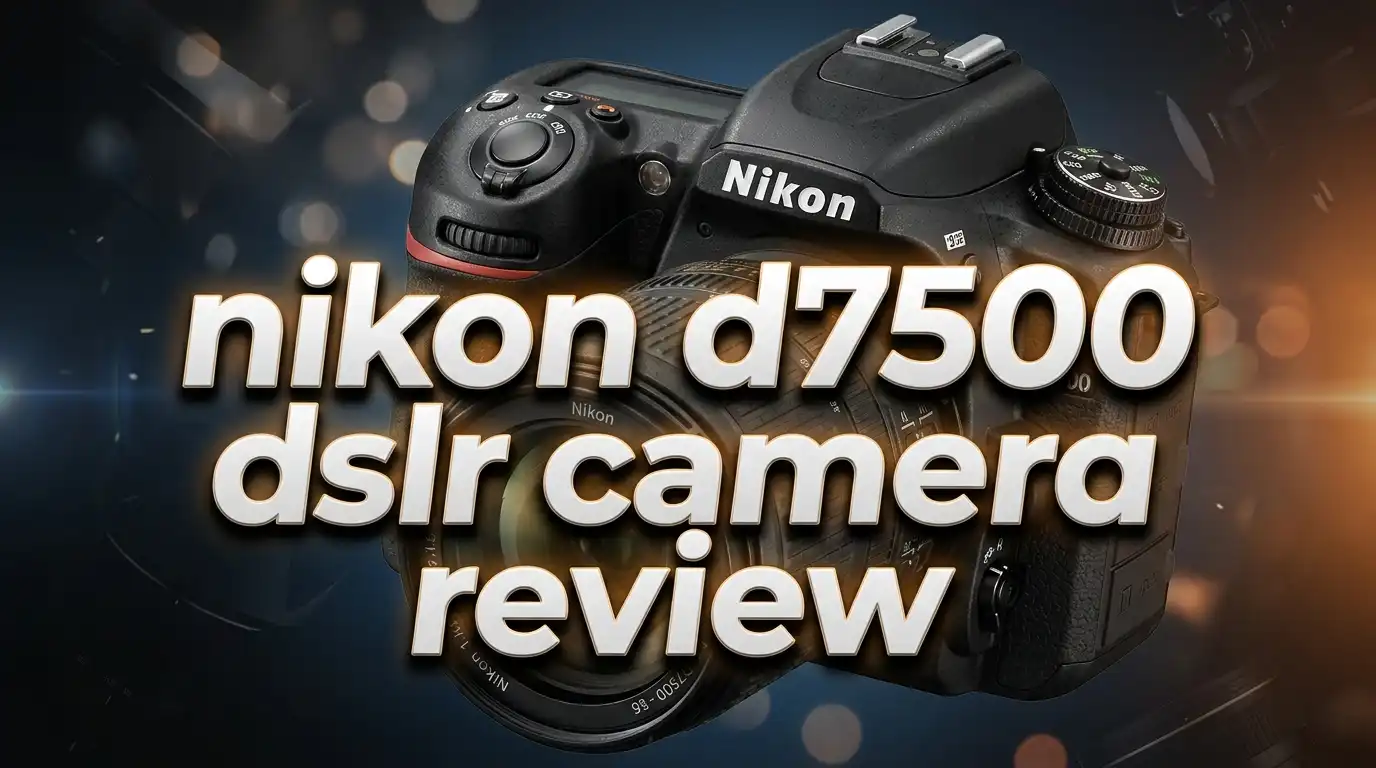
Nikon D7500 DSLR Camera Review 2026: Still Worth Buying?
Are you looking for a DSLR camera that delivers professional grade image quality without breaking the bank?
The Nikon D7500 has been a favorite among photography enthusiasts since its launch in 2017. But here’s the big question: is it still a smart buy in 2026?
It packs a powerful 20.9MP DX format CMOS sensor borrowed from the flagship Nikon D500. It shoots 4K UHD video, fires at 8 frames per second, and handles low light like a champ.
In this detailed review, we break down every feature of the Nikon D7500. We cover image quality, autofocus performance, video capabilities, build quality, and more.
Key Takeaways
- The Nikon D7500 features a 20.9MP DX format CMOS sensor paired with the EXPEED 5 image processor. This combination delivers sharp, vibrant images with excellent color accuracy across a wide range of shooting conditions.
- ISO performance is outstanding, with a native range of 100 to 51,200 and an expanded range up to ISO 1,640,000. This makes it one of the best crop sensor cameras for low light photography even in 2026.
- Continuous shooting speed reaches 8 fps, making the D7500 a solid choice for sports, wildlife, and action photography. The buffer can handle approximately 50 RAW images in a single burst.
- 4K UHD video recording at 30 fps is included, along with Full HD recording at up to 60 fps. This gives content creators a versatile tool for video projects.
- The 51 point autofocus system uses the same Multi CAM 3500FX II module found in the Nikon D500. It provides fast, accurate subject tracking even in challenging lighting.
- Built in Wi-Fi and Bluetooth via SnapBridge allow easy image transfer to your smartphone. The tilting 3.2 inch touchscreen LCD adds flexibility for shooting at different angles.
Nikon D7500 DSLR Camera Overview

- Class leading image quality, ISO range, image processing and metering equivalent to the award...
- Large 3.2” 922k dot, tilting Lcd screen with touch functionality. Temperature: 0 °c to 40 °c...

Last update on 2026-07-24 / Affiliate links / Images from Amazon Product Advertising API
The Nikon D7500 is a mid range APS-C DSLR camera that sits between the entry level D5600 and the professional D500 in Nikon’s lineup. It launched in 2017 at a price of $1,249 for the body only. Today, you can find it for around $900 to $1,000 depending on the retailer.
This camera borrows heavily from the Nikon D500. It uses the same 20.9MP sensor and EXPEED 5 image processor. The result is flagship level image quality in a lighter, more affordable body.
The D7500 weighs just 640 grams. It measures 135.5 x 104 x 72.5mm. These numbers make it compact enough for all day shooting without fatigue. It strikes a balance between performance and portability that few cameras match.
Nikon built this camera with an in body autofocus motor. This opens up compatibility with older Nikon AF lenses that lack their own focus motors. For photographers with a collection of legacy glass, this is a significant advantage.
Image Quality and Sensor Performance
The heart of the Nikon D7500 is its 20.9MP DX format CMOS sensor. This sensor produces images with excellent sharpness, rich colors, and impressive dynamic range. JPEGs come out crisp and clean straight from the camera.
RAW files offer even more flexibility. You can push shadows and pull highlights with ease during post processing. The dynamic range is comparable to many full frame cameras from a few years ago.
Color reproduction is accurate and pleasing. Skin tones look natural, landscapes pop with vibrant greens and blues, and white balance performs reliably in auto mode. The 180K pixel RGB metering sensor helps the camera make smart exposure decisions.
One thing worth noting is the 20.9MP resolution. Some competitors offer 24MP or even 32MP sensors. However, 20.9MP is more than enough for large prints, online sharing, and most professional applications. The lower pixel count also helps with noise control at high ISO values.
Low Light and High ISO Performance
This is where the Nikon D7500 truly shines. The camera offers a native ISO range of 100 to 51,200. You can expand this up to an astonishing ISO 1,640,000 for extreme situations.
In real world use, images remain clean and detailed up to ISO 3,200. Noise is well managed and barely noticeable at normal viewing sizes. At ISO 6,400, you’ll see some grain, but the images are still very usable.
Photography Life calls the D7500’s image quality “best in class for a crop sensor camera” in low light conditions. The EXPEED 5 processor does an excellent job of reducing noise while preserving fine details.
For photographers who shoot indoor events, concerts, or nighttime scenes, the D7500 is a reliable performer. You can confidently shoot up to ISO 12,800 and still produce images suitable for web use and moderate size prints. Very few APS-C DSLRs can match this level of high ISO capability.
Top 3 Alternatives for Nikon D7500
Canon EOS 90D offers a higher resolution 32.5MP sensor, faster 10 fps burst shooting, and Dual Pixel CMOS autofocus. It is a great option for Canon users who want similar mid range DSLR performance.
![Canon DSLR Camera [EOS 90D] with Built-in Wi-Fi, Bluetooth, DIGIC 8 Image Processor, 4K Video, Dual Pixel CMOS AF, and 3.0 Inch Vari-Angle Touch LCD Screen, [Body Only], Black](https://gadgetgateway.blog/wp-content/plugins/aawp/public/image.php?url=YUhSMGNITTZMeTl0TG0xbFpHbGhMV0Z0WVhwdmJpNWpiMjB2YVcxaFoyVnpMMGt2TkRGV1UxZ3JUR2MyYVV3dWFuQm58MTc4NTA2MjU1NQ=)
- High image quality with 32.5 Megapixel CMOS (APS-C) sensor
- High-speed continuous shooting of up to 10 fps with no time Lag during ovf shooting
Last update on 2026-07-24 / Affiliate links / Images from Amazon Product Advertising API
Nikon D500 is Nikon’s flagship APS-C DSLR. It features the same sensor as the D7500 but adds a superior 153 point autofocus system, dual card slots, and a more rugged body. It is the go to choice for sports and wildlife shooters.

- 20.9MP DX format CMOS sensor. Viewfinder: Eye level pentaprism single lens reflex viewfinder
- Expeed 5 image processor; Monitor size: 3.2 inches diagonal
Last update on 2026-07-24 / Affiliate links / Images from Amazon Product Advertising API
Pentax K-3 Mark III is a unique alternative with a 25.7MP sensor, in body image stabilization, and a stunning optical viewfinder. It appeals to photographers who appreciate a different approach to DSLR design.

- Based on core principles of passion for photography, The All New Flagship APS-C model K-3 III...
- The newly designed optical veiwfinder provides a 100% field of view and 1.05x image magnification...
Last update on 2026-07-24 / Affiliate links / Images from Amazon Product Advertising API
Autofocus System and Tracking Capability
The Nikon D7500 uses the Multi CAM 3500FX II autofocus module with 51 focus points. Fifteen of these points are cross type sensors. This system is the same one found in the higher end Nikon D500.
Autofocus acquisition is fast and precise. The camera locks onto subjects quickly, even in low contrast situations. Group area AF mode works especially well for tracking fast moving subjects like birds and athletes.
In live view mode, autofocus slows down considerably. This is a limitation of DSLR technology compared to modern mirrorless cameras. For best results, stick to the optical viewfinder for action photography.
The D7500 can focus in light levels as low as -3 EV. This means it can find focus in near darkness. For event photographers working in dimly lit venues, this capability is extremely helpful. The combination of speed and accuracy makes this autofocus system one of the best in its class.
4K Video Recording and Video Features
The Nikon D7500 records 4K UHD video at 30, 25, and 24 fps. It also supports Full HD recording at up to 60 fps. This makes it a capable tool for videographers and content creators.
4K footage is sharp and detailed. The camera applies a 1.5x crop in 4K mode, which narrows the field of view. You’ll need wider lenses to compensate for this crop factor.
Electronic Vibration Reduction (e-VR) is available during video recording. It helps smooth out handheld footage, though it’s not as effective as dedicated gimbal stabilization.
The D7500 includes a 3.5mm microphone input and headphone jack. These are essential for anyone recording video with external audio. The camera also supports simultaneous internal and external recording, and videos save in the widely compatible MP4 format. For a DSLR at this price point, the video feature set is generous.
Build Quality and Ergonomics
The Nikon D7500 features a monocoque body design made from a carbon fiber composite material. This construction makes the camera both light and strong. It also includes weather sealing with gaskets around the buttons, dials, and card slot.
The grip is deep and comfortable. You can hold this camera for hours without hand fatigue. The button layout is intuitive, with most controls accessible without removing your eye from the viewfinder.
Nikon placed a dedicated ISO button on the top panel near the shutter release. This makes it easy to adjust ISO on the fly during fast paced shoots. The twin command dials allow quick changes to aperture and shutter speed.
The overall build quality feels premium without the excessive weight of pro level bodies like the D500. At 640 grams, it’s one of the lighter semi professional DSLRs available. This makes it a great travel companion for photographers who want performance without bulk.
Tilting Touchscreen LCD Display
The Nikon D7500 has a 3.2 inch tilting touchscreen LCD with 922,000 dots of resolution. The screen tilts up and down, making it useful for low angle and high angle shots.
Touch functionality is responsive. You can tap to focus, swipe through images during playback, and pinch to zoom for checking sharpness. The touch interface makes menu navigation faster and more intuitive.
The screen’s color accuracy is good. It provides a reliable preview of your images right on the back of the camera. Brightness adjusts automatically based on ambient light, or you can set it manually.
One limitation is that the screen does not flip out to the side. This means it’s less useful for vloggers or self portrait shooters who need to see themselves while recording. However, for general photography and videography, the tilting design covers most shooting scenarios.
Connectivity and SnapBridge
The Nikon D7500 includes built in Wi-Fi and Bluetooth through Nikon’s SnapBridge system. This allows you to transfer images wirelessly to your smartphone or tablet.
SnapBridge maintains a low energy Bluetooth connection at all times. It can automatically transfer low resolution images to your phone as you shoot. For full resolution transfers, you can switch to the Wi-Fi connection.
The camera also supports remote shooting through the SnapBridge app. You can trigger the shutter, adjust basic settings, and view a live preview on your phone screen.
USB connectivity uses a Micro USB port. An HDMI output lets you connect the camera to an external monitor or recorder. While the Micro USB standard feels dated in 2026, it remains functional for file transfers and tethered shooting. Overall, the connectivity options meet the needs of most photographers.
Battery Life and Storage
The Nikon D7500 uses the EN-EL15a battery, which provides approximately 950 shots per charge when using the optical viewfinder. This is excellent battery life for a DSLR in this class.
If you shoot in live view mode, battery life drops to around 300 shots. Video recording also drains the battery faster. Carrying a spare battery is a good idea for extended shooting sessions.
The camera has a single SD card slot that supports UHS-I cards. This is one area where the D7500 falls short compared to the D500, which offers dual card slots. Professional photographers who need backup recording may find this limiting.
For most hobbyists and enthusiasts, a single card slot is perfectly adequate. A fast UHS-I SD card with 64GB or 128GB capacity will hold thousands of images. The D7500 writes data quickly enough to keep up with its 8 fps burst rate.
Nikon D7500 with 18 to 140mm Kit Lens

- Class leading image quality, ISO range, image processing and metering equivalent to the award...
- Large 3.2” 922K dot, tilting LCD screen with touch functionality
Last update on 2026-07-24 / Affiliate links / Images from Amazon Product Advertising API
Many buyers choose the Nikon D7500 bundled with the AF-S DX NIKKOR 18 to 140mm f/3.5 to 5.6G ED VR lens. This kit lens covers a versatile focal range that works for landscapes, portraits, travel, and everyday photography.
The 18 to 140mm lens provides nearly an 8x zoom range. It eliminates the need to carry multiple lenses for casual outings. Vibration Reduction (VR) helps produce sharp images at slower shutter speeds.
Image quality from this lens is respectable. It delivers sharp results in the center of the frame at most focal lengths. Corner sharpness drops slightly at the wide end, but this is typical for super zoom lenses.
The kit bundle often saves you money compared to buying the body and lens separately. If you’re a beginner or an enthusiast who wants an all in one solution, this kit makes a lot of sense. Experienced photographers may prefer faster prime lenses or professional zoom lenses for specific tasks.
Who Should Buy the Nikon D7500 in 2026?
The Nikon D7500 is ideal for photography enthusiasts who want a reliable, high performing DSLR. It serves hobbyists, semi professionals, and students equally well.
Wildlife and sports photographers will appreciate the fast 8 fps burst rate and accurate 51 point autofocus system. The excellent high ISO performance also helps in challenging light at stadiums and in nature.
Travel photographers benefit from the lightweight body and versatile kit lens option. The built in Wi-Fi lets you share images on the go without a laptop.
If you already own Nikon F mount lenses, the D7500 is a strong upgrade from entry level bodies like the D3500 or D5600. The in body autofocus motor ensures compatibility with older AF lenses, giving you access to decades of Nikon glass. However, if you prioritize mirrorless features like eye detect autofocus and electronic viewfinders, you might want to consider the Nikon Z50 II instead.
Pros and Cons of the Nikon D7500
Pros:
The D7500 delivers flagship level image quality thanks to its D500 derived sensor and EXPEED 5 processor. High ISO performance is among the best in any APS-C camera.
The 8 fps continuous shooting speed and 51 point autofocus system handle action photography with confidence. Buffer depth is impressive at approximately 50 RAW frames.
Build quality is excellent with weather sealing, a comfortable grip, and light weight construction. The tilting touchscreen and SnapBridge connectivity add modern convenience.
Cons:
The single SD card slot is a notable omission for a camera at this price level. The D7200 it replaced had dual card slots.
Live view autofocus is slow compared to mirrorless alternatives. The screen does not fully articulate for vlogging. The 20.9MP sensor offers lower resolution than some competitors like the Canon 90D’s 32.5MP chip. The Micro USB port also feels outdated.
Is the Nikon D7500 Still Worth It in 2026?
Yes. The Nikon D7500 remains one of the best value DSLRs you can buy in 2026. It delivers excellent image quality, fast performance, and reliable build quality at a reasonable price.
The mirrorless camera market has grown significantly. However, DSLRs like the D7500 still offer advantages. Optical viewfinders provide a lag free shooting experience. Battery life is significantly better than most mirrorless cameras. The F mount lens library is massive and affordable.
If you’re comfortable with DSLR technology and don’t need cutting edge features like real time eye tracking autofocus, the D7500 is hard to beat. It does the fundamentals of photography extremely well.
The camera earned the #1 spot on Amazon’s DSLR best sellers list in early 2026 for good reason. It’s a proven, trusted tool that continues to produce stunning images. For the price, few cameras offer this combination of features, performance, and reliability.
Final Verdict on the Nikon D7500
The Nikon D7500 is a camera that has stood the test of time. Nearly nine years after its release, it continues to impress photographers with its image quality, speed, and dependability.
It’s perfect for enthusiasts who value optical viewfinders and physical controls. The deep grip, intuitive button layout, and responsive performance create a satisfying shooting experience.
The combination of the D500 sensor, 8 fps burst shooting, 4K video, and excellent low light capability makes this a complete package. You get professional tools at a hobbyist price.
If you’re entering the Nikon ecosystem or upgrading from an entry level body, the D7500 is a purchase you won’t regret. It proves that a great camera doesn’t need to be the newest camera. The fundamentals of photography remain unchanged, and the D7500 nails every single one.
Frequently Asked Questions
Is the Nikon D7500 good for beginners?
The D7500 is an excellent camera for beginners who are serious about learning photography. It offers full auto modes for easy shooting and manual controls for growth. The learning curve is moderate, but the camera will serve you well as your skills develop over several years.
Can the Nikon D7500 shoot 4K video?
Yes. The Nikon D7500 shoots 4K UHD video at 30 fps and Full HD at up to 60 fps. It includes a microphone input and headphone jack for external audio monitoring. The 4K footage has a 1.5x crop factor, so you’ll need wider lenses for broader framing.
How does the Nikon D7500 compare to the Nikon Z50?
The D7500 offers better battery life, an optical viewfinder, and access to the massive F mount lens library. The Nikon Z50 provides modern mirrorless features like faster live view autofocus and a more compact body. Your choice depends on whether you prefer DSLR or mirrorless shooting styles.
What lenses work best with the Nikon D7500?
Popular choices include the AF-S DX NIKKOR 35mm f/1.8G for everyday shooting, the AF-S DX 16 to 80mm f/2.8 to 4E for versatility, and the AF-S 70 to 200mm f/2.8E for sports and portraits. The in body autofocus motor also supports older AF-D lenses.
Is the Nikon D7500 weather sealed?
Yes. The Nikon D7500 features weather sealing around its buttons, dials, and card slot door. It can handle light rain and dusty conditions. However, it’s not fully waterproof, so avoid heavy downpours without additional protection.
Does the Nikon D7500 have image stabilization?
The D7500 does not have in body image stabilization. It relies on Vibration Reduction (VR) built into compatible Nikon lenses. Most popular Nikon zoom lenses include VR, so this is rarely an issue in practice.

Hi, I’m Kate! As a tech journalist and gadget enthusiast, I’ve been exploring the intersection of artificial intelligence and consumer technology for over a decade. My passion lies in translating complex tech concepts into practical insights that actually matter to real people.