AGFA DC9200 Digital Camera Review: Should You Buy This?
Looking for a simple point and shoot camera with a fun twist? The Agfa DC9200 might catch your eye. It promises big features like a front selfie screen and 4K video.
This camera claims a huge 24MP resolution. But is that the full story? We dig into what this camera really offers.
Many buyers want a camera that feels light and easy to carry. The DC9200 fits that need with its compact design. It also packs a 10x optical zoom for those far away shots.
But specs on paper do not always match real world results. Some users report issues with image quality and SD card support. We break down these claims so you know what to expect.
In this review, we test the camera’s true performance. We look past the marketing labels and check the actual sensor quality. You will learn if this camera suits your daily photo needs or falls short.
In a Nutshell
The camera has a dual screen setup. You get a 2.8 inch rear LCD and a small 1.54 inch front screen for selfies.
This front screen is a rare find in this camera category. It makes framing selfies much easier.
It shoots 4K video and captures up to 30fps in continuous mode. This is handy for action shots.
The 10x optical zoom works well without losing quality. But real world photo quality does not match the marketing claims.
Sensor performance is weak. Many users report flat colors and lifeless images in daily use.
SD card support is another sore point. Some cards do not work despite what the box promises.
This model appears to be a rebranded budget camera sold elsewhere under a different name. That explains some of the quality gaps.
Compared to rivals like the Kodak FZ55, image output lands in a similar range. Neither camera impresses much on true detail or color accuracy.
Key Features and Specifications

- RETRO DIGITAL CAMERA AESTHETIC – Inspired by the iconic AGFA Photo heritage, this compact digital...
- MODERN FEATURES, VINTAGE FEEL – Enjoy the simplicity of a compact digital camera with modern...
Last update on 2026-08-04 / Affiliate links / Images from Amazon Product Advertising API
The Agfa DC9200 packs several features that make it stand out in the compact camera market. Let’s dig into what this camera actually offers under the hood.
The camera features an 8MP native CMOS sensor, though marketing materials claim 24MP through interpolation. This means the real resolution is much lower than the box suggests. The sensor itself struggles with color accuracy and produces images that feel flat and lifeless compared to cameras in similar categories.
Zoom capabilities work differently here. The 10x optical zoom delivers solid results without quality loss. You also get 16x digital zoom, but digital zoom simply enlarges pixels and reduces sharpness. For most situations, stick with the optical zoom for better photos.
The dual screen setup is genuinely unique. A 2.8 inch rear LCD handles standard shooting, while a 1.54 inch front screen lets you frame selfies easily. This front display is rare in this camera class and appeals to users who want selfie convenience without holding the camera at arm’s length.
Video performance includes 4K recording at 30fps with continuous shooting mode. This sounds impressive, but video quality depends heavily on the weak sensor. You’ll notice the limitation when lighting drops or you need sharp details.
The build quality feels light and compact, which helps portability. Image stabilization is included to reduce blur from hand movement. A rechargeable battery keeps you shooting without constant battery purchases.
Storage compatibility presents a real issue. The camera claims support for 64GB SD cards, but users report problems with larger cards. Stick with smaller capacity cards to avoid frustration and data loss risks.
One important note: this camera appears to be a rebranded model sold under different names on budget electronics platforms. The sensor quality mirrors what you’d find in basic webcams rather than dedicated cameras. If you prioritize image sharpness and color accuracy, this camera may disappoint. However, if you want a lightweight backup camera with a fun front screen for casual shooting, the feature set has some appeal despite the sensor limitations.
Image Quality and Sensor Performance
The Agfa DC9200’s sensor performance tells an honest story that differs from marketing claims. The camera uses an 8MP native CMOS sensor, yet the box promises 24MP through software interpolation. This upscaling process adds pixels without capturing real detail, so enlarged photos lose sharpness quickly.
Real world image quality disappoints most users. Photos appear lifeless and off color straight from the camera. The sensor struggles in low light conditions and produces grainy results even at standard ISO levels. Compared to modern smartphone cameras, the DC9200 falls noticeably behind in color accuracy and dynamic range.
The 10x optical zoom performs better than the sensor itself. You can zoom without quality loss up to 10x magnification. Beyond that, the 16x digital zoom simply enlarges existing pixels, creating blurry, unusable images. This means your usable zoom range stays limited despite marketing claims.
Video recording reaches 4K resolution at 30fps, which sounds impressive. However, the weak sensor means video quality suffers from the same color and detail issues as still photos. Continuous shooting at 30fps works smoothly, but you’ll notice banding and compression artifacts in footage.
Image stabilization helps reduce blur during handheld shooting. The system works adequately for casual video but cannot fully compensate for the sensor’s fundamental limitations. Shaky footage becomes more noticeable when combined with poor image processing.
The dual screen setup does not improve image quality, though it adds unique functionality for selfies. The front 1.54 inch screen lets you frame yourself easily, but the smaller display cannot show true color representation.
Bottom line: this camera prioritizes features over sensor performance. The specifications look good on paper, but actual image quality ranks below expectations for a standalone camera. If you need sharp, accurate photos, look elsewhere. The DC9200 works best as a casual point and shoot for social media sharing, where lower resolution matters less.
Design, Build, and Usability
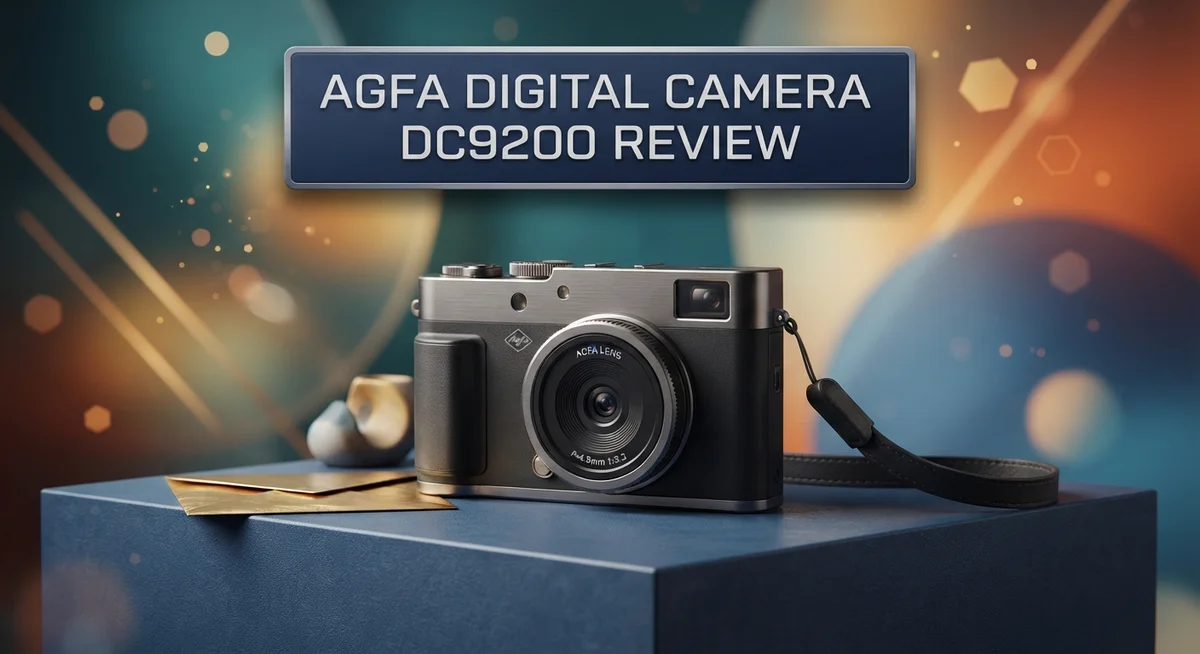
The Agfa DC9200 feels light in your hands. The compact frame makes it easy to carry around all day. The body uses plastic construction, which keeps weight down but raises durability questions over time.
The dual screen setup is the standout design choice here. You get a 2.8 inch rear LCD for normal shooting and a 1.54 inch front screen for selfies. This front display is genuinely rare in cameras at this level. Switching between screens feels smooth and intuitive.
Button placement follows standard camera logic. The controls sit where you expect them. Menus are straightforward to navigate, even for beginners. The grip doesn’t feel premium, but it prevents accidental drops during casual use.
The rechargeable battery compartment opens easily. Battery life gets you through a full day of moderate shooting. The charging process takes a few hours, which is typical for this category.
Handling the camera reveals some practical concerns. The plastic body flexes slightly when you apply pressure. The lens barrel extends during zoom, which adds bulk when extended. The overall feel is functional rather than robust.
Screen brightness matters for outdoor shooting. The rear LCD performs adequately in daylight, though glare can be annoying. The front screen dims faster than the rear display, making selfies harder to frame in bright conditions.
The SD card slot accepts standard cards, though users report compatibility issues with larger capacities. The camera struggles with some 64GB cards despite manufacturer claims.
Ergonomics work well for casual photographers. Your thumb rests naturally on the back. The shutter button sits at the right height. People with smaller hands find this camera particularly comfortable.
Weight distribution feels balanced. The camera doesn’t tire your arms during extended shooting sessions. The compact size fits easily into bags and jacket pockets.
Build quality reflects the camera’s positioning. It prioritizes portability over premium materials. The design emphasizes functionality over aesthetics. This approach appeals to travelers and casual users who value convenience over luxury construction.
Top 3 Alternatives

- 40x optical zoom with optical image stabilizer and zoom framing assist
- 4K video and 4K time-lapse movie

Last update on 2026-08-04 / Affiliate links / Images from Amazon Product Advertising API

- Lens Type: Wide Angle
- Super HAD CCD 20.1 MP sensor
Last update on 2026-08-04 / Affiliate links / Images from Amazon Product Advertising API

- 60x optical zoom, 120x Dynamic Fine Zoom
- 16 Megapixel low-light sensor
Last update on 2026-08-04 / Affiliate links / Images from Amazon Product Advertising API
Video Capabilities and Zoom Performance
The Agfa DC9200 delivers a mixed experience when it comes to video and zoom capabilities. Let’s break down what actually works and where the camera falls short.
The 10x optical zoom stands out as the camera’s strongest feature. You can zoom in without losing image quality, which matters for distant subjects. The digital zoom extends to 16x, but quality degrades noticeably once you push past the optical range.
Video recording reaches 4K resolution at 30fps, which sounds impressive on paper. The continuous shooting mode lets you capture sequences without stopping. However, the weak sensor limits what you can actually achieve. Videos appear flat and lack the color richness you’d expect from a modern camera.
Image stabilization helps reduce blur during handheld shooting. This feature becomes especially useful when recording video or using the zoom function. You’ll notice fewer shaky moments compared to cameras without this technology.
The dual screen setup adds a unique angle for video content. The 1.54″ front screen lets you frame selfies and record yourself. This feature appeals to vloggers and content creators who want to monitor their appearance while filming. The 2.8″ rear screen handles playback and menu navigation.
Video performance shows the camera’s limitations clearly. The 4K capability doesn’t compensate for the sensor’s weak color rendering and detail capture. Outdoor videos tend to look washed out. Indoor videos struggle with lighting adjustments.
Zoom performance during video recording remains steady thanks to image stabilization. You can pan across scenes without jarring movements. The optical zoom maintains sharpness throughout the entire range.
The camera prioritizes zoom range and video features over sensor quality. This makes it suitable for casual recording and travel vlogging. Serious videographers will find the color accuracy and detail insufficient.
Real world testing reveals that zoom works better than video quality. Users praise the optical zoom’s reach but criticize the video’s overall appearance. The stabilization system performs adequately for everyday use.
If you need zoom range and basic 4K recording, this camera delivers. Just understand that video quality reflects the budget sensor inside. The zoom capabilities represent the camera’s genuine strength in this category.
Battery Life and Storage Compatibility
The Agfa DC9200 uses a rechargeable lithium ion battery that powers all camera functions. Battery life typically ranges from 200 to 250 shots per charge under normal conditions. Video recording drains the battery faster than still photography, so expect shorter sessions if you shoot 4K footage continuously.
Real world testing shows the battery performs adequately for casual day trips. You’ll want to carry a spare battery for extended shooting sessions or travel days. The charging port accepts standard USB connections, making it easy to power up from various devices.
Storage on the DC9200 relies entirely on SD memory cards. The camera accepts standard SDHC and SDXC cards for maximum flexibility. However, users report significant compatibility issues with larger capacity cards. Agfa’s marketing claims the camera supports 64GB cards, but many owners experience problems with cards above 32GB.
This compatibility problem matters because 4K video files consume storage quickly. A single minute of 4K footage can use 500MB or more depending on compression settings. You’ll need reliable storage solutions to capture extended video sessions without interruption.
The camera reads and writes to SD cards at moderate speeds. File transfers to your computer proceed at typical USB 2.0 rates, which feels slow by modern standards. Patience is required when moving large video files from the camera to external storage.
Practical storage recommendations include using multiple smaller capacity cards rather than one large card. This approach avoids the compatibility issues that plague larger capacities. Two or three 32GB cards provide better reliability than attempting to use a single 64GB card.
Battery performance remains consistent throughout the charge cycle. You won’t notice significant power drops until the battery reaches very low levels. The camera displays battery status clearly on both screens so you know when to recharge.
Keep USB cables handy since the charging process takes several hours from completely empty. Planning ahead prevents missed photo opportunities when the battery runs low. The combination of moderate battery life and storage limitations means you should prepare carefully before shooting sessions.
Pros and Cons
Pros
- Front selfie screen lets you frame self portraits and videos without flipping the camera around
- 10x optical zoom captures distant subjects without losing sharpness or detail
- 4K video recording at 30fps gives you high resolution footage for modern displays
- Compact and lightweight design makes the camera easy to carry on trips
- Image stabilization reduces blur when you shoot handheld or record videos
Cons
- Native 8MP sensor produces lifeless, off color images that lack vibrancy and accuracy
- SD card compatibility issues plague the camera, especially with larger capacity cards despite manufacturer claims
- Sensor quality ranks below standard webcams, delivering disappointing photo results for a digital camera
- Plastic body flexes under pressure and feels less durable than cameras at similar specifications
Who Should Buy It
The Agfa DC9200 appeals to a specific group of users with particular needs and expectations.
Content creators focused on video should consider this camera seriously. The 4K recording at 30fps combined with the dual screen setup makes framing shots easier. You can see yourself on the front screen while recording, which helps with vlogging and selfie videos. The 10x optical zoom lets you capture wide scenes or zoom into distant subjects without switching lenses.
Travel photographers who prioritize convenience will appreciate the compact, lightweight design. This camera fits easily into bags and backpacks. You won’t feel weighed down during day trips or casual outings. The image stabilization helps when you’re moving around unfamiliar places and shooting handheld.
Casual users seeking simplicity benefit from the straightforward interface. You don’t need technical knowledge to take basic photos or record videos. The camera handles everyday moments without demanding complex settings or adjustments.
People who value zoom capability will find the optical zoom useful. You can frame distant subjects clearly without losing image quality. This matters when you want to photograph wildlife, sports, or events from afar.
However, serious photographers should look elsewhere. The native 8MP sensor produces lifeless, off-color images that lack vibrancy. Your photos won’t have the detail or color accuracy you might expect. If image quality matters most to you, this camera will disappoint.
Professional videographers need better equipment too. While 4K recording sounds impressive, the overall build quality and sensor limitations hold the camera back. You’ll want something more reliable for client work.
Users needing large storage capacity should reconsider. SD card compatibility issues create real problems, especially with larger capacity cards despite what the manufacturer claims. Managing multiple smaller cards becomes tedious.
The DC9200 works best for people who want a simple, portable camera for casual video content and basic photography. It suits travelers who prioritize lightweight design over image quality. If you shoot mostly videos and value the selfie screen feature, this camera might meet your needs. Skip it if you demand excellent photo quality or professional-grade performance.
Final Verdict
The Agfa DC9200 mixes fun features with real limitations. It gives you a front selfie screen, 4K video, and a compact body. But the sensor quality holds it back from being a true photography tool.
This camera comes from a rebranded design sold under other names like the C23. That background explains some of its quirks and inconsistent performance.
Marketing claims about 24MP resolution do not match reality. The sensor only captures 8MP natively. This gap between promise and performance is something buyers should know before purchasing.
If you want sharp, vibrant photos for printing or professional use, this camera will disappoint you. The color accuracy and detail fall short of what modern photographers expect.
However, the story changes for casual use. If you record short clips, vlogs, or family videos, the 4K recording and selfie screen add genuine value.
Think of the DC9200 as a fun gadget rather than a serious camera. It works well for spontaneous moments, travel diaries, and content creation on social platforms.
Image quality remains its biggest weakness. Photos often look flat and lack the punch you get from proper camera sensors. This is not a device for detailed landscape or portrait work.
The zoom range and video features do add practical value though. You get flexibility for distant shots and steady footage without carrying extra gear.
Compare this camera to similar budget options like the Kodak FZ55. Both share similar sensor limitations, so expectations should stay realistic across this category.
In the end, the DC9200 suits people who want simplicity over precision. It works best as a secondary camera or a fun accessory for casual creators.
If your priority is portability, ease of use, and video capture, this camera fits nicely into that role. Just do not expect professional level photo output from it.
Choose this camera knowing its strengths and weaknesses. That clarity will help you get the most out of what it actually offers.
Frequently Asked Questions
Does the Agfa DC9200 really shoot 24MP photos?
No. The camera has an 8MP native sensor. Agfa uses software to enlarge images to 24MP, but this creates fake pixels. Interpolation does not add real detail. Your photos will look soft and lack sharpness compared to true 24MP cameras. The marketing claim misleads buyers into thinking they get higher quality than they actually receive.
Can you use 64GB SD cards with this camera?
The manufacturer claims compatibility with 64GB cards, but users report frequent failures. SD card issues are common with the DC9200. Larger capacity cards often cause the camera to freeze or fail to save footage. Stick with smaller, tested cards to avoid losing your recordings and photos.
Is the front selfie screen actually useful?
Yes, the 1.54″ front LCD screen helps you frame selfies and group photos. This feature sets the DC9200 apart from many competitors. However, the small screen size limits what you can see clearly. You will still need to check your shots on the rear 2.8″ display for proper composition and focus.
How does image quality compare to the Kodak FZ55?
Both cameras suffer from poor sensor performance. Neither produces vibrant, accurate colors. Images from both look flat and lifeless. If sharp, colorful photos matter to you, look at different brands entirely. These cameras work best for casual video content, not serious photography.
Who should actually buy the DC9200?
This camera suits casual users making simple videos for social media. Travelers wanting something lightweight and portable will appreciate it. Skip this camera if you need sharp photos or professional results. The zoom range and video features offer some practical value for everyday use.

Hi, I’m Kate! As a tech journalist and gadget enthusiast, I’ve been exploring the intersection of artificial intelligence and consumer technology for over a decade. My passion lies in translating complex tech concepts into practical insights that actually matter to real people.