Sony ZV E10 Mirrorless Camera Review 2026: Is It Still Worth Buying?
The Sony ZV E10 keeps showing up in vlogging conversations even in 2026. This little APS C camera launched back in 2021, yet creators still recommend it for YouTube, TikTok, and travel content. The reason is simple. It packs a big sensor, clean 4K video, and fast autofocus into a tiny body that costs far less than most rivals.
You might wonder if a five year old camera can still hold its ground today. Newer models like the ZV E10 II and Canon R50 V have raised the bar.
But the original ZV E10 still sells in huge numbers because of its low price and proven results. It remains one of the easiest cameras to recommend for new creators in 2026.
This review breaks down every important detail. You will learn about the sensor, video quality, audio tools, autofocus, battery life, and real world performance. By the end, you will know if the ZV E10 fits your needs or if you should grab something else.
Key Takeaways
- Budget friendly powerhouse: The ZV E10 still costs hundreds less than the ZV E10 II while offering 90 percent of the same video quality for casual creators.
- Great for vlogging: The fully articulating screen, built in directional mic, and Product Showcase mode make it ideal for YouTube and TikTok work.
- Strong autofocus: Real time Eye AF for humans and animals tracks subjects with high accuracy in both photos and videos.
- 4K video oversampled from 6K: You get sharp, detailed footage with no pixel binning, which beats many newer phones and entry cameras.
- Compact and light: The body weighs only 343 grams, so you can carry it all day without strain.
- Some limits to note: No in body stabilization, a smaller NP FW50 battery, and a recording crop in 4K 30p hold it back from being perfect.
Sony ZV E10 Overview and First Impressions

- Large 24.2MP APS-C Exmor CMOS Sensor and fast BIONZ X processor
- 4K Movie oversampled from 6k w/ full pixel readout, no pixel binning

Last update on 2026-07-10 / Affiliate links / Images from Amazon Product Advertising API
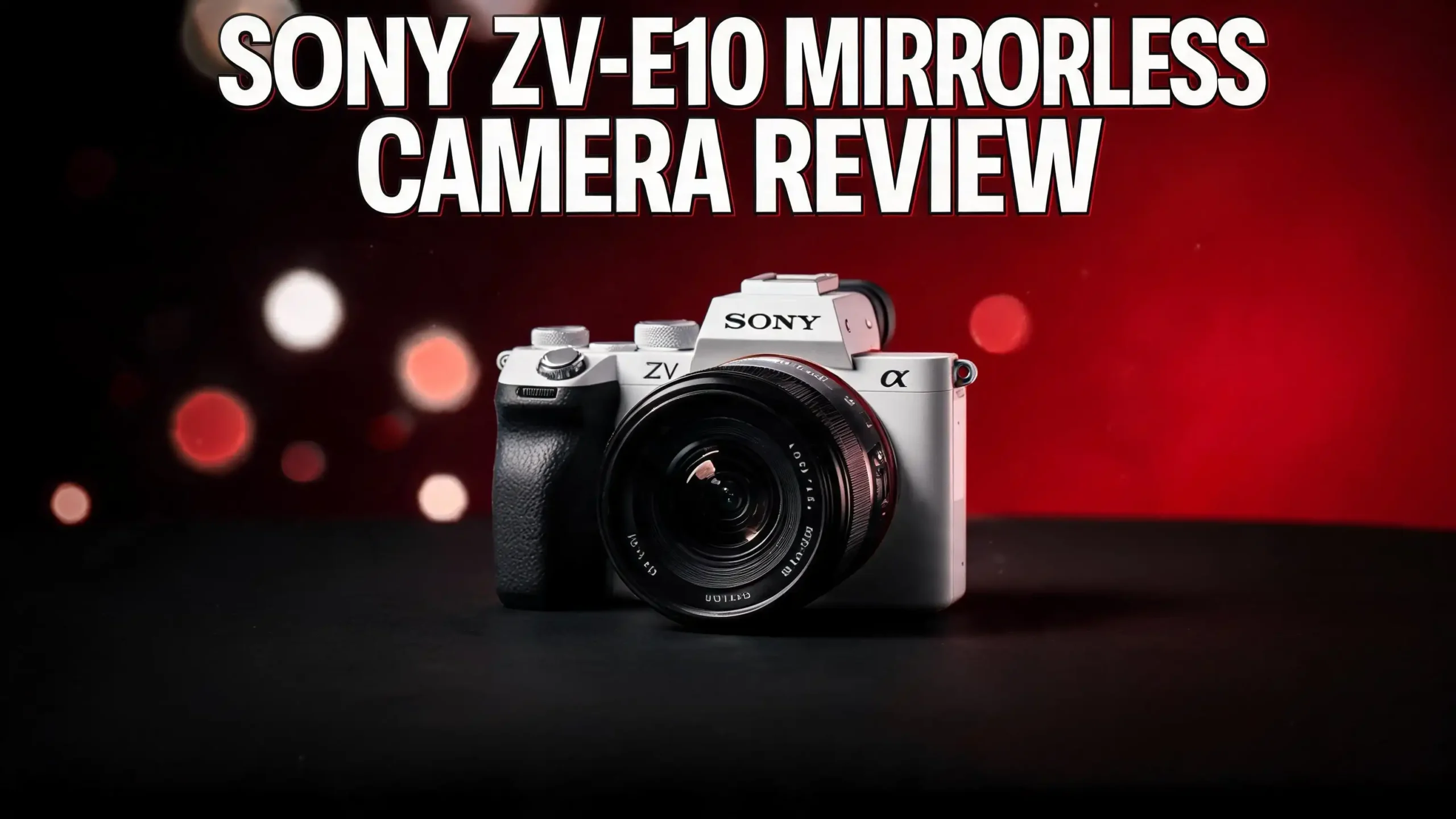
The Sony ZV E10 is an APS C mirrorless camera built for content creators. Sony launched it in July 2021 as a video first version of the popular A6100. It uses the same E mount, so you can attach dozens of Sony and third party lenses.
The body feels solid in hand even though it uses mostly plastic. The grip is deep enough for one handed shooting. The top of the camera has a clever design with a built in three capsule directional mic and a furry windscreen included in the box. This setup gives you clean audio right out of the gate.
You get a 3 inch touchscreen that flips out to the side. This side flip design is much better than a tilt screen for vloggers. You can see yourself while talking to the camera without a lens or mic blocking the view. The touchscreen also lets you tap to focus and swipe through menus.
The ZV E10 ships in two main kits. You can buy the body only or the version with the 16 to 50mm power zoom lens. The kit lens works fine for general use, but most creators upgrade to a prime or wider zoom later. The camera comes in black and white, with the white version still being a fan favorite.
Design and Build Quality in 2026
The ZV E10 measures 115 by 64 by 45mm and weighs just 343 grams with the battery and card. That makes it one of the lightest interchangeable lens cameras you can buy in 2026. You can slip it into a small bag or even a jacket pocket with a pancake lens.
The body uses a magnesium alloy front plate with plastic on the rest. It does not have full weather sealing, so you should avoid heavy rain or dusty beaches. For normal indoor and outdoor use, the build holds up well. Many users on Reddit report owning theirs for three or four years with no issues.
The button layout is simple. There is a dedicated record button on top in bright red, a background defocus button, and a Product Showcase button. These three controls speed up your vlogging workflow. You do not need to dig through menus to change key settings.
One thing missing is the mode dial. Instead, you press a button to switch between still, movie, and S&Q modes. Photographers who switch settings often may find this frustrating. But for video first creators, the design works well. The grip is also bigger than the A6100, which helps when shooting one handed for long sessions.
Sensor and Image Quality
The ZV E10 uses a 24.2 megapixel APS C Exmor CMOS sensor paired with the BIONZ X processor. This is the same sensor found in the Sony A6100 and A6400. Even in 2026, it produces sharp images with great color reproduction.
ISO range runs from 100 to 32000 natively and expands to 51200 for stills. Low light performance stays clean up to ISO 6400, with usable results pushing to ISO 12800. Beyond that, you start to see noise creep into shadows. For most YouTube and Instagram work, this range is more than enough.
Dynamic range sits around 13 stops at base ISO. That means you can recover plenty of shadow and highlight detail in editing. Sony color science also gives you nice skin tones straight out of camera. You do not need heavy color correction unless you want a specific look.
JPEG quality is excellent, but RAW files give you the most flexibility. The ZV E10 shoots 14 bit lossless RAW, which is rare at this price point. You can edit in Lightroom or Capture One with full control over exposure and white balance. Pair the camera with a sharp prime like the Sigma 30mm f1.4, and you get image quality close to full frame for half the price.
Video Performance and 4K Quality
Video is where the ZV E10 truly shines. It records 4K at up to 30fps, oversampled from 6K with full pixel readout and no pixel binning. This gives you sharp, detailed footage that holds up against much newer cameras.
You also get 1080p at up to 120fps for slow motion. The footage is clean and color matches the 4K mode well. S Log3, HLG, and standard picture profiles let you choose between flat color for grading or punchy looks straight out of camera. This flexibility is rare at this price.
There is one catch with 4K 30p. The camera applies a 1.23x crop at 30fps but stays uncropped at 24p. For vlogging at arm’s length, this crop can make wide shots feel tight. A 10 to 18mm or 11mm prime lens fixes the issue easily.
The ZV E10 also offers helpful video modes like Product Showcase, which quickly shifts focus from your face to an item you hold up. Background defocus gives you instant bokeh with one button press. These features save time and look great for product reviews, unboxings, and beauty content. The camera does not overheat as easily as the ZV E10 II, which is a real plus during long recording sessions.
Top 3 Alternatives for Sony ZV E10

- Exmor R CMOS sensor: The ZV-E10 II features Sony's most advanced sensor technology in an APS-C...
- Interchangeable lenses to capture your vision : From the G Master series, which blends breathtaking...
Last update on 2026-07-24 / Affiliate links / Images from Amazon Product Advertising API
The Sony ZV E10 II is the direct successor. It uses a 26MP back illuminated sensor, the bigger NP FZ100 battery, 4K 60p, and 10 bit color. It costs more but gives you a true upgrade if you record long form videos or want better low light.

- 20.1MP stacked back illuminated 1" Exmor RS CMOS sensor w/ DRAM, large aperture 24-70mm1 F...
- Enhanced subject capture: wide 425 Phase/ 425 contrast detection points over 84 percent of the...
Last update on 2026-07-24 / Affiliate links / Images from Amazon Product Advertising API
The Sony A6400 is a great choice if you want a hybrid camera. It has a built in electronic viewfinder, the same 24MP sensor as the ZV E10, and a hot shoe with full functionality. Photographers who shoot some video love this body.

- High Image Quality: Canon EOS R50 4K digital camera features a 24.2 Megapixel CMOS (APS-C) sensor...
- High-Speed Continuous Shooting: Capture fast action with up to 12 fps with Electronic First Curtain...
Last update on 2026-07-24 / Affiliate links / Images from Amazon Product Advertising API
The Canon EOS R50 offers a clean menu system and Canon’s great Dual Pixel autofocus. It records uncropped 4K 30p and has a fully articulating screen. Beginners who find Sony menus confusing often pick this one.
Autofocus Performance
Sony built its name on autofocus, and the ZV E10 carries that legacy well. It uses 425 phase detection AF points covering 84 percent of the frame. The system works fast and locks on quickly in both bright and low light.
Real time Eye AF works for humans and animals. You do not need to switch modes. The camera detects eyes automatically and tracks them as your subject moves. In testing, the system rarely loses focus even with fast moving kids or pets.
Touch tracking is another strong point. You tap a subject on the screen, and the camera follows it across the frame. This works in both photo and video modes. For vloggers, this means you can hand the camera to a friend and trust it will keep you sharp.
The Product Showcase mode deserves special mention. It tells the camera to prioritize objects you hold near the lens over your face. When you bring a phone, book, or makeup product into the frame, focus snaps to the item in under a second. This makes the ZV E10 perfect for review channels. The autofocus on this five year old camera still beats many 2026 entry cameras from other brands.
Audio Features and Built In Microphone
Audio sets the ZV E10 apart from most vlogging cameras. The built in three capsule directional mic captures your voice clearly even in noisy spots. Sony includes a furry windscreen that slides into the hot shoe and blocks wind noise effectively.
The mic captures sound in front of the camera and rejects noise from behind. This setup gives results close to a budget shotgun mic without any extra gear. For walking vlogs, indoor talking head videos, and travel content, you can rely on the built in audio alone.
If you want even better sound, the camera has both a 3.5mm mic input and a 3.5mm headphone output. The headphone jack is a feature many cameras at this price skip. You can monitor audio in real time, which prevents nasty surprises in post.
The hot shoe is a Multi Interface Shoe, so you can plug in Sony digital mics like the ECM B1M or ECM W2BT. These mics send audio straight through the shoe with no cable needed. This clean setup looks professional and reduces failure points during shoots. Audio quality is one of the biggest reasons creators still pick this camera in 2026.
Battery Life and Storage
The ZV E10 uses the older NP FW50 battery. CIPA rates it at 440 shots per charge or about 80 minutes of video recording. In real world use, you get closer to 60 to 70 minutes of mixed 4K and 1080p footage on a single battery.
This is the camera’s weakest area. The newer ZV E10 II uses the bigger NP FZ100 battery and lasts almost twice as long. For day long shoots, you will want two or three spare NP FW50 batteries. Third party options from Wasabi Power or RAVPower work well and cost much less than Sony branded packs.
USB C charging helps a lot. You can charge the camera from a power bank while you keep shooting. This turns long vlog days into a non issue if you carry a small USB battery in your bag. The camera also draws power directly from USB, so you can record indoors plugged in for hours.
Storage uses a single SD card slot that supports UHS I cards. UHS II would have been nice, but UHS I cards are cheap and handle 4K 100Mbps footage without issue. Pick a V30 rated card from SanDisk or Lexar to avoid buffer issues during burst shooting or long video clips.
Connectivity and Live Streaming
The ZV E10 includes Wi Fi, Bluetooth, and USB C. You can connect to the Sony Imaging Edge app on your phone to transfer photos, control the camera remotely, or geotag images using your phone’s GPS.
USB streaming is a standout feature. Plug the camera into your computer with a USB C cable, and it works as a high quality webcam at 720p or 1080p. No capture card needed. This makes the ZV E10 a top pick for Twitch streamers, podcasters, and remote workers who want better video than a built in laptop cam.
There is also a Micro HDMI port for clean output to monitors or capture cards. The HDMI signal is uncropped 4K, so you can use the camera with an ATEM Mini or similar switcher for live productions. Many small studios use the ZV E10 in multi camera setups for this reason.
Bluetooth pairing with phones is quick and stable. You can use your phone as a wireless remote, which is handy for solo shoots. The Imaging Edge app has improved a lot since launch and now feels fast and reliable in 2026. Sony continues to update the firmware and app, which keeps the camera feeling fresh.
Lens Compatibility and System Strength
The ZV E10 uses the Sony E mount, one of the largest lens systems for APS C cameras. You can pick from over 70 native Sony E mount lenses plus dozens more from Sigma, Tamron, Viltrox, and other third party brands.
For vlogging, the Sony 10 to 20mm f4 PZ is a top pick for wide selfie shots. The Sigma 16mm f1.4 gives stunning low light performance for under 450 dollars. The included 16 to 50mm kit lens covers basics but feels soft at the edges and lacks a fast aperture.
For photography, the Sony 35mm f1.8 OSS and Sigma 30mm f1.4 are favorites. Both give you bright apertures, sharp images, and great bokeh. Full frame Sony FE lenses also work, though they are heavier and more expensive.
This wide lens choice future proofs your purchase. If you upgrade to the ZV E10 II, A6700, or even a full frame body later, your E mount lenses come with you. No other entry level mirrorless system offers this much flexibility at this price. That makes the ZV E10 a smart long term investment, not just a one off camera.
Who Should Buy the Sony ZV E10 in 2026
The ZV E10 is best for new content creators on a budget. If you want to start a YouTube channel, vlog your travels, or upgrade from your phone, this camera gives you the most value for the money in 2026.
It also works well for hybrid creators who shoot some photos and a lot of video. Real estate agents, small business owners, and Etsy sellers use it for product photos and short clips. The image quality holds up against cameras that cost twice as much.
Twitch streamers and podcasters who want a better webcam should also consider it. The USB streaming feature alone justifies the price for many people. Pair it with a 35mm prime, and your stream will look professional overnight.
The ZV E10 is not the best choice for sports photographers, wildlife shooters, or anyone who needs in body stabilization. The lack of IBIS means handheld video can feel shaky without a stabilizing lens or gimbal. Heavy still shooters might prefer the A6400 for its viewfinder. But for the target audience of vloggers and creators, the ZV E10 still hits the sweet spot in 2026.
Sony ZV E10 vs ZV E10 II: Quick Comparison
The biggest question buyers ask in 2026 is whether to save money on the original or pay more for the Mark II. Both have their place.
The ZV E10 II offers real upgrades. It has a new 26MP back illuminated sensor, 4K 60p with 10 bit 4:2:2 color, the bigger NP FZ100 battery, and improved menus. The original ZV E10 caps at 4K 30p with 8 bit color.
However, the ZV E10 II costs around 1000 dollars body only, while the original sits closer to 600 to 700 dollars. That price gap buys you a great lens or several accessories. For casual creators who post to YouTube and Instagram, the original is more than enough.
The ZV E10 II also has a known overheating issue when shooting 4K 60p 10 bit, with shutdowns around 20 to 25 minutes. The original ZV E10 runs cooler in most conditions. If you record long uncut videos, the older camera may actually serve you better. Pick the Mark II only if you truly need 4K 60p, 10 bit color, or longer battery life.
Pros and Cons Summary
Every camera has trade offs. Here is a clear look at what the ZV E10 does well and where it falls short in 2026.
The strengths are clear. You get a large APS C sensor, oversampled 4K video, fast autofocus with Eye AF, a fully articulating screen, and a great built in mic. The body is light, the lens system is huge, and the price is hard to beat. USB streaming and a headphone jack add pro level features at an entry level price.
The weaknesses also matter. There is no in body stabilization, so handheld 4K footage needs a gimbal or stabilized lens. The NP FW50 battery is small and you will need spares. The 4K 30p crop limits wide selfie shots without an ultra wide lens. The menu system, while updated, still feels busier than Canon’s.
There is also no electronic viewfinder, which photographers may miss. Build quality is fine but not weather sealed. For the price, these trade offs are acceptable. You give up a few features to get a video focused camera that punches above its weight class.
Frequently Asked Questions
Is the Sony ZV E10 still worth buying in 2026?
Yes, the ZV E10 remains one of the best budget vlogging cameras in 2026. It offers oversampled 4K video, fast autofocus, and a great built in mic at a price most competitors cannot match. Unless you need 4K 60p or 10 bit color, it still delivers excellent results for YouTube, TikTok, and Instagram creators.
How does the Sony ZV E10 compare to the ZV E10 II?
The ZV E10 II has a newer sensor, 4K 60p, 10 bit color, and a bigger battery. The original ZV E10 costs less, runs cooler during long recordings, and offers nearly the same image quality for casual use. Choose the Mark II only if you need its specific upgrades.
Does the Sony ZV E10 overheat during long video recording?
The original ZV E10 handles long 4K 24p and 30p recordings better than the Mark II. Most users report no overheating during typical vlog sessions under 30 minutes. Heat warnings may appear in hot environments or during back to back 4K clips.
Can you use the Sony ZV E10 as a webcam?
Yes, you can use the ZV E10 as a webcam through USB C with no capture card needed. It outputs 720p or 1080p video directly to your computer. This makes it a popular choice for streamers, podcasters, and remote workers.
What lenses work best with the Sony ZV E10?
Top lens picks include the Sony 10 to 20mm f4 PZ for wide vlogs, Sigma 16mm f1.4 for low light, and Sony 35mm f1.8 OSS for portraits. The kit 16 to 50mm lens works for beginners but most users upgrade within a year.
Does the Sony ZV E10 have image stabilization?
The ZV E10 does not have in body image stabilization. It relies on lens based optical stabilization and digital Active SteadyShot in video mode. For smooth handheld footage, pair it with an OSS lens or a small gimbal.
How long does the Sony ZV E10 battery last?
The NP FW50 battery lasts about 440 photos or 80 minutes of video on a single charge. Most creators carry two or three spare batteries for full day shoots. USB C charging lets you top up from a power bank while shooting.

Hi, I’m Kate! As a tech journalist and gadget enthusiast, I’ve been exploring the intersection of artificial intelligence and consumer technology for over a decade. My passion lies in translating complex tech concepts into practical insights that actually matter to real people.