Canon G7X Mark III Review 2026: Still Worth Buying?
The Canon G7X Mark III remains one of the most talked about compact cameras in 2026. Content creators, vloggers, and travel photographers still pick this little powerhouse over many newer models. But does it still hold up against the latest competition?
This review breaks down every feature, performance detail, and real world result. You will learn about its strengths, its weak spots, and who should buy it today. By the end, you will know if this camera fits your creative needs.
Many users still call it the YouTuber’s favorite because of its flip screen and clean audio input. Others love it for street photography and travel snaps. Let us look at what makes this 2019 release still relevant in 2026.
Key Takeaways
- Compact and pocketable design makes it perfect for travel, vlogging, and everyday street photography without the bulk of a mirrorless camera.
- 4K video at 30fps without crop gives creators sharp footage, while the 3.5mm microphone jack offers clean external audio for podcasts and YouTube videos.
- Bright f/1.8 to f/2.8 lens with 24-100mm zoom range delivers great low light shots and beautiful background blur.
- Live streaming to YouTube directly from the camera remains a standout feature that few rivals match in this size class.
- 20.1 megapixel stacked 1-inch CMOS sensor with DIGIC 8 processor handles photos and video with strong color science.
- The camera still sells around $750 to $880 in 2026, making it a mid range premium compact rather than a budget option.
Canon PowerShot G7X Mark III Overview

- 20.1 Megapixel 1.0” stacked CMOS sensor and DIGIC 8 Image processor.
- 4.2x optical zoom Lens (24-100mm f/1.8-2.8) with optical image Stabilizer.
Last update on 2026-10-25 / Affiliate links / Images from Amazon Product Advertising API
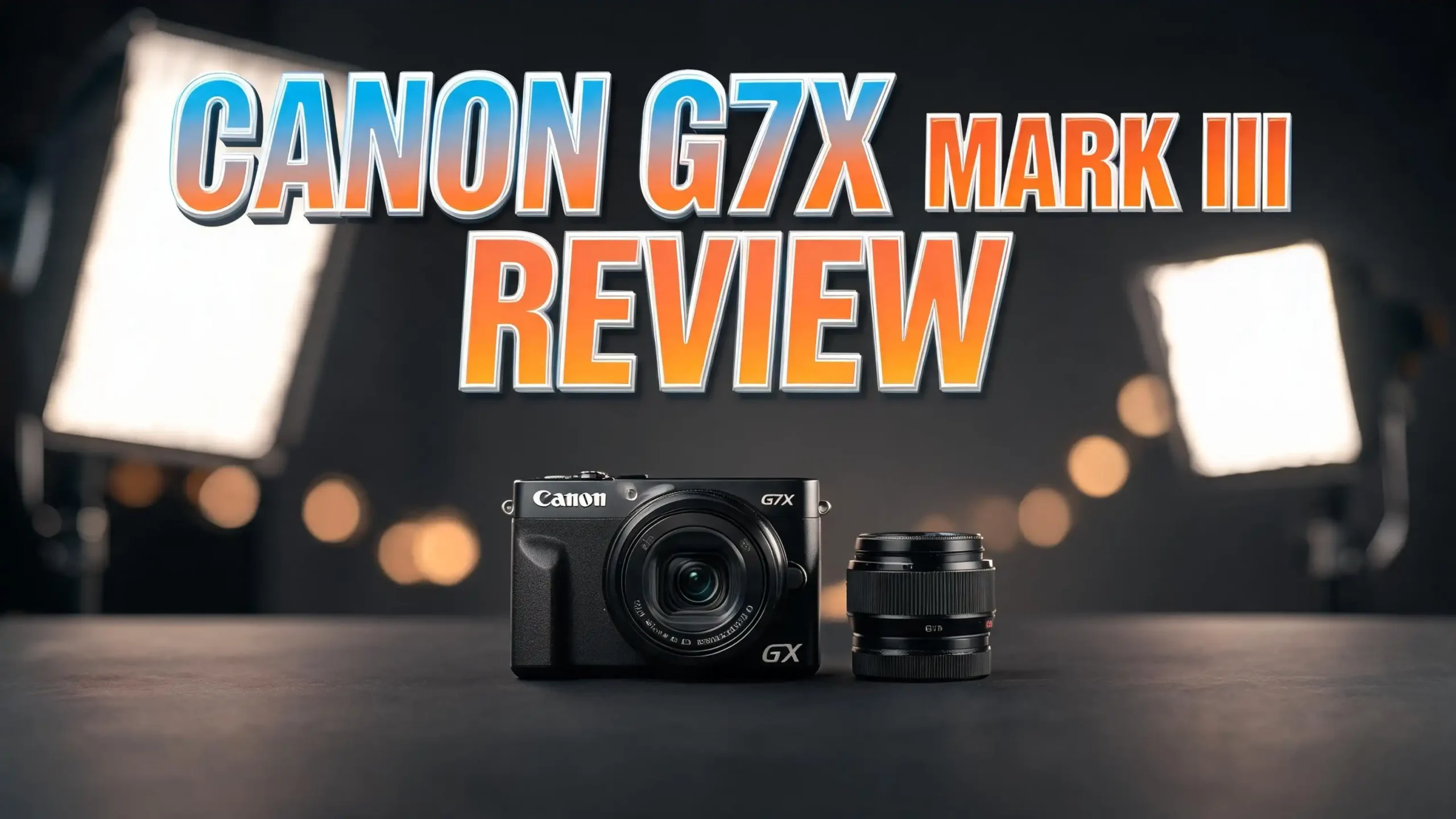
The Canon PowerShot G7X Mark III launched in July 2019. Canon designed it for vloggers, content creators, and serious enthusiasts. The camera fits in your jacket pocket and weighs only 304 grams.
It packs a 20.1 megapixel 1-inch stacked CMOS sensor. The DIGIC 8 processor handles fast image processing and video encoding. The lens covers a useful 24mm to 100mm equivalent zoom range.
The camera includes a flip up touchscreen, which vloggers love. You can frame yourself easily while recording. The built in microphone works fine, but the 3.5mm mic jack lets you plug in a shotgun or lavalier mic.
In 2026, this camera competes with newer compact models. Yet Canon still sells it actively. The reason is simple: the combination of size, image quality, and video features remains hard to beat at this price point.
Many YouTubers and TikTok creators still recommend it. Its color science gives skin tones a warm, pleasing look right out of camera. You spend less time editing and more time creating.
Build Quality and Design
The Canon G7X Mark III feels solid in the hand. It uses a metal body with a textured grip on the front. The grip is small but provides enough hold for one handed shooting.
The top plate has a mode dial, shutter button with zoom ring, exposure compensation dial, and power button. The layout feels logical. You can change settings without diving into menus.
The flip up screen tilts 180 degrees upward. This makes it ideal for selfies and vlogging. The screen also tilts down by about 45 degrees for low angle shots. It is a touch sensitive LCD that responds well to taps and swipes.
The camera measures 105 x 61 x 41 mm. It slides into a jeans pocket with no trouble. The black finish looks professional, and a silver version is also available.
One small complaint: the camera lacks weather sealing. You need to keep it dry during rain or beach trips. Still, the build feels premium for its size and price.
The pop up flash sits on the top left. It works well for fill light in tricky situations. The lens extends when you turn the camera on and retracts when off.
Image Quality and Sensor Performance
The 1-inch stacked CMOS sensor is the heart of this camera. It captures 20.1 megapixels of detail in every shot. Photos look crisp, colorful, and ready to share.
Daylight images are sharp and full of detail. The dynamic range is good for a compact camera. You can recover shadows in editing without much noise.
Low light performance is solid up to ISO 1600. At ISO 3200, some noise appears but stays usable. Above ISO 6400, the noise becomes more visible. For most YouTube thumbnails and Instagram posts, this range is more than enough.
The lens covers 24-100mm with a bright f/1.8 to f/2.8 aperture. At 24mm and f/1.8, you get beautiful subject separation. Background blur looks soft and pleasing.
Canon’s color science continues to impress. Skin tones look natural and warm. Reds, oranges, and yellows pop without looking fake. You can shoot in JPEG and get great results straight from the camera.
RAW shooters get more flexibility. The CR3 RAW files hold plenty of data for post processing. You can pull back highlights and lift shadows with confidence.
4K Video Features and Performance
The G7X Mark III shoots 4K video at 30fps with no crop. This was a huge deal in 2019, and it still matters in 2026. Many compact cameras crop 4K footage, making wide shots harder.
Full HD recording goes up to 120fps. You get smooth slow motion clips for creative edits. The footage looks clean and detailed.
The autofocus during video is decent but not the best. It uses contrast detection in some modes, which can hunt in low light. For most vlogging at arm’s length, it works fine.
Image stabilization helps a lot when walking and filming. The combined optical and digital stabilization keeps footage steady. It is not gimbal smooth, but it is good enough for handheld vlogging.
The camera lacks a headphone jack, so you cannot monitor audio live. This is a downside for serious creators. However, the 3.5mm microphone input still makes it better than most pocket cameras.
Vertical video shooting is supported. The camera detects orientation and saves video for TikTok and Instagram Reels. Creators on these platforms find this feature very useful.
Top 3 Alternatives for Canon G7X Mark III

- Dependable all-weather body, designed to be waterproof down to a depth of 15 meters, for up to one...
- Dustproof against dirt and stains. Shockproof against a fall from a height of two meters.

Last update on 2026-10-25 / Affiliate links / Images from Amazon Product Advertising API

- 20. 1MP 1. 0 Type stacked CMOS sensor, Zeiss Vario Sonnar T 24 200 millimeter F2. 8 F4. 5 large...
- 0. 02 sec. High AF speed, 357 point focal plane Phase detection AF and 425 point contrast detection...
Last update on 2026-10-12 / Affiliate links / Images from Amazon Product Advertising API

- Compact Powerhouse: Canon PowerShot V10 vlogging camera features a sleek, pocket-sized design...
- Versatile Vlogging Camera: Incredible low-light capabilities with a 15.2-megapixel 1-inch...
Last update on 2026-10-25 / Affiliate links / Images from Amazon Product Advertising API
Autofocus System
The G7X Mark III uses a contrast detection autofocus system. It does not have phase detection like newer Sony models. Still, it works well for most situations.
In good light, the AF locks on quickly. Face detection works reliably for portraits and vlogs. The camera tracks faces as you move around the frame.
Eye detection is included but only works on humans. There is no animal eye AF like Sony cameras offer. For pet photography, you may need to focus manually.
Low light autofocus is slower. The camera hunts more in dim conditions. This is one of the weaknesses compared to the Sony ZV-1 II or RX100 VII.
Touch to focus works smoothly on the LCD. You tap your subject, and the camera locks focus instantly. This is super helpful for video where you want to shift focus between subjects.
Continuous autofocus during video is decent. It keeps your face sharp during vlogs. For fast moving subjects, expect some focus pulls and minor hunting.
Vlogging Features and Live Streaming
This is where the G7X Mark III truly shines. Canon built it with vloggers in mind from the start. The features list reads like a YouTuber’s wishlist.
Live YouTube streaming is a flagship feature. You can broadcast directly from the camera to your channel. No capture card, no laptop, just press a button and go live.
The flip up touchscreen makes self framing easy. You can see yourself clearly while recording. The 3.5mm mic input gives you broadcast quality audio with an external mic.
Vertical video mode is built in. The camera saves your footage in portrait orientation for social platforms. This saves time editing for Reels, Shorts, and TikTok.
The camera also supports clean HDMI output. You can use it as a webcam for Twitch, Zoom, or OBS. With Canon’s EOS Webcam Utility software, plugging in via USB also works.
Battery life during video is around 60 to 75 minutes per charge. Carry a spare battery if you plan long vlogging sessions. The camera does charge via USB, which is convenient on the go.
Battery Life and Storage
The Canon G7X Mark III uses an NB-13L battery. Canon rates it for around 265 shots per charge with the LCD on. Real world use often gives you closer to 300 shots.
For video, expect 60 to 80 minutes of 4K recording. Full HD recording lasts longer, around 90 to 110 minutes. Heavy use of zoom and screen brightness will drain it faster.
The camera supports USB charging through the USB-C port. You can plug it into a power bank during long shoots. This is a great feature for travelers and creators on the move.
Storage uses a single SD card slot. UHS-I SD cards work fine for most users. For 4K video, faster cards reduce buffer wait times during burst shooting.
Always carry a spare battery. The battery is small, and intensive use drains it quickly. Third party batteries from brands like Wasabi Power are affordable and reliable.
The camera turns on quickly, which helps preserve power. You can switch it off between shots to extend battery life during a full day of shooting.
Connectivity and Sharing
The G7X Mark III includes built in Wi-Fi and Bluetooth. You can connect it to your smartphone using the Canon Camera Connect app. Transferring photos and videos is simple.
Bluetooth keeps a low power connection with your phone. This makes Wi-Fi pairing faster when you want to transfer files. The app also lets you control the camera remotely.
You can geotag your photos using your phone’s GPS. Travel photographers love this feature. The app records location data as you shoot.
The USB-C port handles charging, data transfer, and tethered shooting. The micro HDMI output sends clean video to external recorders or monitors.
There is no NFC support, which some Android users miss. However, the Bluetooth and Wi-Fi combo works smoothly for both iPhone and Android phones.
Live streaming setup is straightforward. You sign in to your Google account through the camera menus, and it connects to YouTube. The process is much simpler than using a laptop and capture card.
Photo Modes and Creative Features
The G7X Mark III offers many shooting modes for different situations. Full manual mode gives you complete control over aperture, shutter, and ISO. Aperture priority and shutter priority modes are also available.
Auto mode handles everything for casual shooters. It picks the best settings based on the scene. The results are usually spot on.
Creative filters add fun effects to your photos. You can shoot with miniature, fisheye, or grainy black and white looks. These work well for social media content.
The panorama mode stitches wide scenes automatically. You sweep the camera across, and it combines the frames. Results look clean and free of obvious seams.
Continuous shooting reaches 20 frames per second with focus locked. With continuous AF, it slows to about 8.3 fps. This is fast enough for kids, pets, and street action.
The camera includes a built in ND filter. This blocks 3 stops of light, letting you shoot wide open in bright sun. Vloggers love this for keeping shallow depth of field outdoors.
Audio Quality and Microphone Input
Audio matters more than people realize for video content. The G7X Mark III handles it better than most compact cameras. The built in stereo mics capture decent sound for casual use.
The 3.5mm microphone input is the real winner here. You can plug in a Rode VideoMicro, a wireless lavalier system, or a shotgun mic. Audio quality jumps massively with an external mic.
Wind noise reduction is built in for the internal mics. It helps in light breeze but cannot replace a proper deadcat windshield. For outdoor vlogging, an external mic with windscreen is the best option.
There is no headphone jack on the camera. You cannot monitor audio levels in real time with headphones. This is a known limitation for professional creators.
Audio levels can be adjusted manually in the menus. You can set them before recording to avoid clipping. Auto levels work fine for most vloggers who prefer simplicity.
The audio sync with video is solid. You will not need to fix lip sync in post production. This saves editing time and keeps your workflow simple.
Pros and Cons
Every camera has strengths and weaknesses. Here are the honest pros and cons of the Canon G7X Mark III in 2026.
The pros include: pocket sized design, bright f/1.8 to f/2.8 lens, sharp 20.1 megapixel sensor, 4K video with no crop, live YouTube streaming, 3.5mm microphone input, flip up touchscreen, and Canon’s reliable color science.
The camera feels great in the hand. Image quality holds up well against newer models. Battery charges via USB, which is super convenient.
The cons include: no in body image stabilization for stills, no headphone jack, contrast detection only autofocus, no weather sealing, average low light performance above ISO 3200, and a fairly steep price for a 2019 release.
Battery life could be longer. The lack of a flat color profile like Sony’s S-Log limits color grading flexibility. Some users wish for a viewfinder, but adding one would increase size.
For most vloggers and travel photographers, the pros far outweigh the cons. The camera does what it promises and does it well.
Who Should Buy the Canon G7X Mark III?
This camera fits specific creators best. Vloggers and YouTubers get the most value from its features. The flip screen, mic input, and live streaming make content creation easy.
Travel photographers love how it slips into a pocket. You skip the bulky DSLR setup and still get great image quality. The 24-100mm range covers most travel needs.
Beginner photographers can grow with this camera. Auto mode handles the basics, while manual mode teaches you the craft. It is a great learning tool.
Street photographers appreciate the discreet size. People barely notice the camera, which helps capture candid moments. The fast lens performs well in city light.
If you need fast action sports shots, look at the Sony RX100 VII instead. If you want a smaller, simpler vlog camera, the Sony ZV-1F or Canon V10 works better.
For everyone else who wants one camera that does photos and video well, the G7X Mark III remains a smart choice in 2026.
Final Verdict
The Canon G7X Mark III earns its spot as a top compact camera in 2026. It blends solid image quality, useful video features, and pocket friendly design into one package. Few cameras match this combination at this price.
The bright lens, flip screen, and microphone input make it ideal for content creators. The 4K video without crop still beats many newer compacts. Canon’s color science continues to deliver pleasing results.
Is it perfect? No. The autofocus could be faster, and the battery life is short. But the strengths far outweigh the limits. For vloggers, travelers, and casual creators, it remains a fantastic buy.
If you find a good deal under $800, grab it. The camera has aged well and continues to perform in 2026. New software, accessories, and creative communities still support it strongly.
Buy it if you want a small, capable camera that handles photos and YouTube videos with ease. Skip it if you need pro level autofocus or top tier low light performance.
The Canon G7X Mark III is still relevant, still capable, and still a smart purchase in 2026.
FAQs
Is the Canon G7X Mark III still worth buying in 2026?
Yes, it remains a strong choice for vloggers and casual photographers. The combination of 4K video, bright lens, flip screen, and microphone input still beats many compact cameras at this price.
Does the Canon G7X Mark III shoot 4K video without crop?
Yes, the camera records 4K at 30fps with no crop. This gives you a true wide angle view, unlike many compact cameras that crop 4K footage heavily.
Can I use the Canon G7X Mark III as a webcam?
Yes, you can use it as a webcam through USB with Canon’s EOS Webcam Utility software. The camera also offers clean HDMI output for use with capture cards.
How long does the battery last on the Canon G7X Mark III?
The battery lasts around 265 to 300 shots per charge. For video, expect 60 to 80 minutes of 4K recording. Carrying a spare battery is highly recommended.
Does the Canon G7X Mark III have image stabilization?
Yes, it has optical image stabilization in the lens. For video, it adds digital stabilization too. The combination works well for handheld vlogging and walking shots.
What memory card works best with the Canon G7X Mark III?
A UHS-I SD card with at least 64GB capacity works well. For 4K video, use cards rated U3 or V30 for smooth recording without buffer issues.
Can the Canon G7X Mark III live stream to YouTube?
Yes, the camera supports direct live streaming to YouTube. You sign in through the menus, and it broadcasts without needing a computer or capture card.
Is the Canon G7X Mark III good for beginners?
Yes, it is beginner friendly with auto modes and a touchscreen. The camera also has manual controls, so it grows with you as your skills improve.

Hi, I’m Kate! As a tech journalist and gadget enthusiast, I’ve been exploring the intersection of artificial intelligence and consumer technology for over a decade. My passion lies in translating complex tech concepts into practical insights that actually matter to real people.