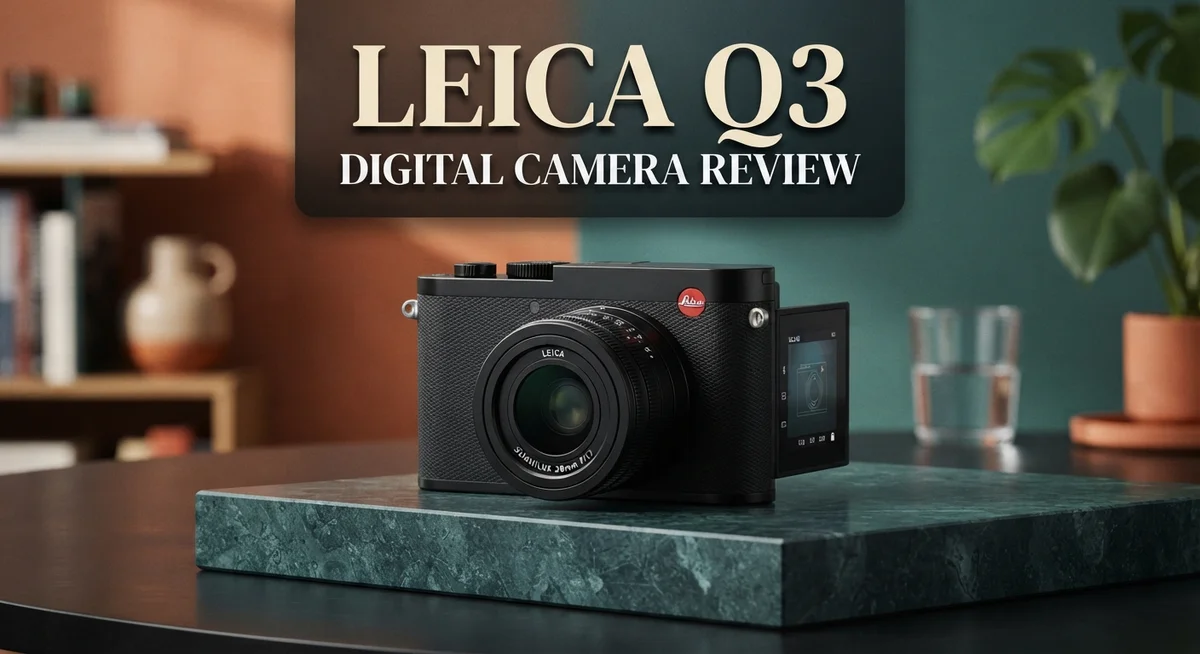
Leica Q3 Digital Camera Review: Is It Worth Buying?
The Leica Q3 turns heads for good reason. This full frame camera packs a 60.3MP BSI CMOS sensor into a compact metal body. It promises pro level results without a bulky setup.
Photographers want a camera that delivers stunning detail and handles beautifully. The Q3 checks both boxes with ease. Its triple resolution feature lets you shoot at 60, 36, or 18MP based on your needs.
This review breaks down every part of the Leica Q3 experience. We look at image quality, build design, and video performance. You will also see how it stacks up against rivals like the Fujifilm X100VI and Nikon Z fc.
Is the Q3 worth your attention? Stick around. We cover the pros, the cons, and everything in between. By the end, you will know if this camera fits your photography style perfectly.
In a Nutshell
- Sensor Power: The 60.3MP full frame sensor captures incredible detail. You get flexibility with triple resolution options for different needs.
- Viewing Experience: The 5.67MP OLED viewfinder feels sharp and bright. Framing shots becomes effortless with this clear display.
- Flexible Screen: A tilting LCD screen helps with tricky angles. Street photographers and vloggers will love this feature.
- Video Capability: This camera shoots crisp 8K footage. However, shadows can get a bit noisy in darker scenes.
- Build Quality: The full metal housing feels premium in hand. It survives daily use without feeling fragile.
- Overall Feel: Despite its digital sensor, the Q3 delivers files that feel organic and natural. Post processing needs stay minimal thanks to excellent in camera output.
Sensor and Image Quality
The 60.3MP full frame BSI CMOS sensor sits at the heart of what makes the Q3 special. This sensor captures images with remarkable clarity and depth across a wide range of lighting situations.
Color accuracy stands out immediately when you review files on your computer. The sensor renders skin tones naturally and preserves subtle color gradations in landscapes. You won’t find harsh posterization or artificial-looking transitions between tones.
The triple resolution feature gives you flexibility. You can shoot at full 60MP for maximum detail, drop to 36MP for a balanced approach, or use 18MP when file size matters. Each mode maintains excellent image quality without compromises.
RAW files deserve special attention here. The Q3 produces RAW images that need minimal post-processing work. Shadows hold detail without excessive noise, and highlights retain information even in bright scenes. This means your editing workflow becomes faster and more straightforward.
Dynamic range performance impresses across different scenarios. Backlit subjects retain detail in both the subject and background. High contrast scenes stay manageable without requiring advanced tone mapping techniques.
The sensor’s BSI design helps with light gathering efficiency. This means better performance in low light situations compared to older sensor designs. You get cleaner images at higher ISO settings, which matters when you’re shooting indoors or during evening hours.
Contrast and sharpness work together beautifully throughout the frame. The lens and sensor combination delivers edge-to-edge clarity that feels consistent. You won’t notice significant softness at the corners, even when shooting at wider apertures.
Video performance shows both strengths and quirks. The 8K capability is impressive, but video shadows can introduce more noise than you’d expect. The digital character becomes more obvious in video mode compared to still photography. Some users find this slightly artificial feeling, though it depends on your personal preference and editing style.
Overall, the sensor delivers professional-grade image quality in a compact package. Whether you shoot stills or video, the Q3 produces files that stand up to serious editing and printing. The combination of resolution, dynamic range, and color science makes this sensor a genuine asset for photographers who demand excellent results.

- Leica Q3: A groundbreaking digital camera renowned for its innovative features and performance...
- Triple Resolution Sensor: Featuring a first-ever 60MP BSI CMOS sensor with Triple Resolution...
Last update on 2026-10-26 / Affiliate links / Images from Amazon Product Advertising API
Design and Build Quality
The Leica Q3 feels like a precision instrument the moment you pick it up. The full metal housing wraps around your hand with genuine solidity. Every panel, every edge, and every button tells you this camera was engineered with care.
Weight matters in design, and at 743g, the Q3 strikes a smart balance. It’s substantial enough to feel professional, yet light enough to carry all day without fatigue. The compact footprint of 130 x 80.3 x 92.6mm means it fits into bags and backpacks without complaint.
The physical layout deserves praise. Buttons sit exactly where your fingers expect them. The control scheme feels intuitive because Leica avoided unnecessary complexity. You won’t fumble searching for settings you need. Photographers report that daily operation becomes second nature within hours of use.
The tilting rear LCD screen adds real versatility to your shooting options. Low angles and overhead shots become easier to frame and focus. You can compose from positions that would normally require guesswork. This practical feature separates the Q3 from cameras with fixed screens.
The 5.67MP OLED viewfinder delivers a bright, clear window into your scene. The 0.79x magnification gives you good spatial awareness. You see what you’re about to capture with confidence. The viewfinder feels responsive and doesn’t introduce lag or color distortion.
Metal construction runs throughout the entire body. This isn’t plastic with metal trim. The commitment to metal housing means the Q3 can handle occasional bumps and weather exposure. Photographers who work in challenging conditions appreciate this durability.
The overall ergonomics work together seamlessly. The grip sits naturally in your palm. The controls respond with satisfying tactile feedback. Nothing feels cheap or compromised. The design philosophy prioritizes function over flashy aesthetics.
Build quality like this requires attention to manufacturing details. Seams align precisely. Panels fit without gaps. The camera feels like it will serve you for years without degradation. This level of construction quality separates cameras that merely work from cameras that inspire confidence every time you use them.
Video Performance and Capabilities
The Q3 steps up as a serious video machine with its 8K recording capability. You get smooth frame rates and crisp resolution that handles professional work. The camera records in multiple formats, giving you flexibility for different projects and workflows.
Frame rates and codec options matter when you’re shooting video. The Q3 delivers solid performance here. You can choose settings that match your editing software and final output needs. This flexibility means the camera adapts to your vision, not the other way around.
Color rendering in video shows the Leica DNA. The files maintain that signature look that Leica shooters love. Skin tones appear natural, and color separation stays clean even in complex lighting. You won’t fight the files in post-production as much as you might with other cameras.
Autofocus during video keeps pace with moving subjects. The system tracks smoothly without hunting or pumping. You can shoot handheld and trust the camera to maintain focus on your subject. This matters for vlogging, interviews, and documentary work.
The tilting LCD screen becomes your best friend during video recording. You can compose shots from unusual angles without contorting yourself. Low angles, high angles, and selfie-style framing all become easy. The screen stays responsive and bright even in sunlight.
One real consideration: shadow areas in video can show more noise than you might expect. The files look clean in well-lit scenes, but darker regions require careful exposure. You’ll want to expose slightly brighter and recover in post if needed. This isn’t a deal-breaker, just something to know about your workflow.
The overall video experience feels polished. The Q3 gives you tools that work intuitively. Buttons sit where you need them. Menus stay logical. You focus on your story, not the camera’s interface.
Video shooters will appreciate the stabilization options available. The combination of sensor size and lens design helps minimize shake. You get usable handheld footage without constant gimbal work. The metal body also adds mass that naturally dampens vibration during recording.
Top 3 Alternatives
Sony RX1R II

- Exceptional 61MP resolution full-frame Exmor R CMOS sensor
- Micron-adjusted integrated lens / sensor optimizes performance

Last update on 2026-10-26 / Affiliate links / Images from Amazon Product Advertising API
The Sony RX1R II brings full-frame excellence to a compact camera body. This camera features a 42-megapixel sensor that captures stunning detail in every shot. The fixed 35mm lens delivers sharp, consistent results without the need to change lenses.
You get fast autofocus performance and reliable image stabilization. The camera handles both stills and video well. Weather sealing protects your investment during outdoor shooting. The electronic viewfinder provides a clear, real-time preview of your images.
Fujifilm X100V

- Great photography every day, everywhere: X100V features a newly designed, incorporated 23 millimeter...
- Designed for quality and speed: From fleeting holiday moments and family celebrations to...
Last update on 2026-10-26 / Affiliate links / Images from Amazon Product Advertising API
The Fujifilm X100V combines retro aesthetics with modern technology. This camera uses an APS-C sensor paired with a 23mm lens, offering a classic 35mm equivalent focal length. Film simulations let you apply different color profiles straight from the camera.
The hybrid viewfinder gives you the choice between optical and electronic viewing. You can switch between them instantly. Build quality feels premium with its magnesium alloy construction. Battery life extends further than many competitors. The camera produces beautiful colors and tones right out of the box without heavy editing.
Canon PowerShot G7X

- Canon USA Authorized. Items Include: Canon PowerShot G7 X Mark III Digital Camera (Black), NB-13L...
- Crisp Photos in a Compact Package - The PowerShot G7 X Mark III is built for sharp, vibrant photos...
Last update on 2026-10-26 / Affiliate links / Images from Amazon Product Advertising API
The Canon PowerShot G7X delivers compact convenience with a one-inch sensor. Its 24-100mm equivalent zoom range handles multiple shooting situations. You don’t need to carry extra lenses for most photography needs.
The camera features fast autofocus and reliable performance in various lighting conditions. Touchscreen controls make navigation simple and intuitive. Video recording capabilities work well for content creators. Pocket-friendly design means you can carry it anywhere. The lens retracts into the body when powered off, reducing overall size during transport.
Viewfinder and Display
The viewfinder and display on the Q3 represent two distinct viewing experiences. The 5.67MP OLED viewfinder gives you a bright, immersive preview of your composition. The 0.79x magnification feels natural for framing shots without feeling cramped.
OLED technology means the viewfinder delivers deep blacks and vibrant colors. You see your scene with excellent contrast and clarity. The refresh rate keeps up smoothly when you pan across subjects. Eye relief is comfortable for extended shooting sessions, whether you wear glasses or not.
The real standout feature sits on the back. The 3 inch tilting LCD screen opens up new creative angles. You can flip it upward for high angle shots or tilt it down for low perspectives. This flexibility matters when you’re working in tight spaces or trying unconventional compositions.
The LCD screen itself packs impressive resolution and color accuracy. You can trust what you see when reviewing images. The tilting mechanism feels solid and doesn’t wobble during use. Switching between the viewfinder and rear screen is seamless.
For video work, the tilting screen becomes essential. You can position it where you need it while keeping the camera stable. The screen remains responsive and readable in various lighting conditions. Autofocus tracking displays clearly on the LCD during recording.
Both display options work together to give you complete control. The viewfinder suits traditional framing when you want to work quickly. The rear screen excels when you need flexibility or when checking critical focus. You’re never stuck with just one viewing method.
The display system reflects Leica’s attention to detail. Colors appear accurate and consistent across both screens. Brightness levels adjust automatically to your environment. Menu navigation happens intuitively on the LCD. The optical quality of the viewfinder ensures you’re not missing any details in your composition.
Whether you prefer the viewfinder’s immediacy or the screen’s versatility, the Q3 delivers. Both options feel responsive and reliable. This dual system gives serious photographers real freedom in how they work.
Handling and Controls
The Leica Q3 puts responsive controls right where your fingers expect them. The layout follows intuitive logic, so you won’t fumble through menus when you want to capture a moment. Every button and dial sits in its natural position.
The metal body gives you something substantial to hold. Your grip feels secure, and the camera responds to your touch with mechanical confidence. The weight distribution keeps fatigue away during long shooting sessions.
Physical buttons dominate the control scheme. You get dedicated dials for aperture and shutter speed, which means less time digging through digital menus. This direct approach appeals to photographers who think in traditional terms. The tactile feedback tells you exactly what you’ve adjusted.
The rear controls cluster logically around the LCD screen. Your thumb finds the navigation pad without looking. The menu system stays simple, so you navigate options quickly. Function buttons adapt to your workflow, letting you assign shortcuts to tasks you use most.
One standout feature is the focus ring. It turns smoothly and offers precise control when you need manual focus. The autofocus system responds instantly, but the manual option gives you creative freedom. Switching between modes happens without interruption.
The joystick on the back deserves mention. It handles focus point selection with minimal effort. Your thumb moves across the screen to place focus exactly where you want it. This becomes especially useful when you’re composing through the viewfinder.
Button placement avoids accidental presses. The shutter button sits naturally under your index finger. Secondary controls stay slightly recessed, so you won’t trigger them by accident. This thoughtful design prevents mistakes during critical moments.
The overall control experience feels purposeful and efficient. Leica stripped away unnecessary complexity. You get what you need without bloat. Whether you’re shooting stills or video, the controls adapt to your task. The camera encourages a hands on approach rather than screen tapping. This philosophy makes the Q3 feel like an extension of your vision, not an obstacle between you and your shot.
Pros and Cons
Pros
- Exceptional image quality with fantastic detail in RAW files and minimal post-processing needed
- Outstanding build quality and full metal housing that feels substantial and durable
- Excellent contrast and sharpness across all shooting conditions
- Simple, intuitive controls with logical button placement and responsive joystick
- Tilting rear LCD screen that works perfectly for video and creative angles
Cons
- Shadow areas in video footage show more noise than expected, especially in darker scenes
- Video image can feel overly digital rather than organic, affecting the natural look
- Premium positioning means this camera sits at a higher investment level than compact alternatives
Who Should Buy It
The Leica Q3 appeals to photographers who demand premium image quality without compromise. If you shoot stills primarily, this camera becomes your ideal companion. The 60MP sensor captures extraordinary detail. You’ll find RAW files contain information that minimal post-processing can enhance further.
Professional photographers benefit greatly from the Q3’s capabilities. Studio work, commercial shoots, and editorial assignments play to this camera’s strengths. The full metal construction withstands daily professional use. Your clients will appreciate the sharpness and contrast you deliver.
Travel photographers should seriously consider this option. The compact form factor fits easily into bags. You get a full-frame camera without the bulk of traditional systems. The fixed lens means fewer items to carry. Your workflow stays simple during long trips.
Street photographers love the Q3’s handling. The intuitive controls let you focus on composition rather than menus. Physical buttons respond exactly as expected. The joystick navigates settings quickly. You’ll spend less time adjusting and more time shooting.
Content creators working with both stills and video find value here. The tilting LCD screen works perfectly for vlogging and creative angles. The 8K video capability opens possibilities for future projects. However, be aware that shadow areas in video show more noise than you might expect. The video image can feel overly digital rather than organic in appearance.
Enthusiasts who appreciate engineering excellence gravitate toward Leica cameras. The Q3 represents meticulous craftsmanship. Every detail reflects intentional design choices. Holding the camera feels substantial and purposeful.
Hybrid shooters benefit from the dual display system. The OLED viewfinder delivers immediacy for fast-paced situations. The LCD screen provides versatility for creative work. You get both experiences in one package.
However, the Q3 may not suit everyone. If you need interchangeable lenses, look elsewhere. Videographers working primarily in low light should consider alternatives due to shadow noise concerns. Photographers seeking maximum zoom range will feel limited by the fixed lens.
The Q3 targets serious photographers who value image quality, build durability, and operational simplicity above all else.
Final Verdict
The Leica Q3 stands out as a camera built for people who take photography seriously. It combines exceptional image quality with a design that feels solid in your hands. Every part of this camera reflects careful engineering.
We tested the Q3 across different shooting scenarios. The results consistently impressed us. RAW files showed impressive detail and needed little correction afterward.
The full metal housing tells you this camera means business. It survives daily use without feeling fragile. This build quality justifies why photographers trust Leica gear for years of shooting.
Video performance shows some limitations worth noting. Shadow areas can appear noisy in certain lighting conditions. The digital look in video sometimes lacks the organic feel that stills photography delivers so well.
Despite these video quirks, the Q3 excels where it matters most. Still photography remains its core strength. Sharp images with excellent contrast come naturally with this camera.
Compared to competitors like the Fujifilm X100VI or Nikon Z fc, the Q3 offers a different experience. Those cameras target casual shooters seeking retro styling. The Q3 speaks to photographers who prioritize substance over trends.
The Fujifilm X-Pro3 comes closer in spirit but still misses that distinctive Leica feel. Something about how this camera operates just clicks for serious shooters. It’s hard to put into words until you use it yourself.
We recommend the Q3 for photographers who value precision and reliability. Street photographers will appreciate its discreet handling. Travel enthusiasts benefit from its compact yet capable design.
Content creators mixing stills and video should weigh the video limitations carefully. If video quality matters equally to photos, other options might serve better.
For pure photography enthusiasts, though, the Q3 delivers something special. It rewards patience and skill with consistently impressive results. This camera doesn’t just take pictures. It helps you create images that feel intentional and polished every single time you press the shutter.
Frequently Asked Questions
Does the Leica Q3 work well for video content?
The Q3 handles video capably, especially for photographers transitioning into motion work. It records in 8K and offers solid stabilization. However, shadow areas show more grain than ideal, particularly in low light scenes. The image can feel somewhat digital rather than organic, which matters if you want a cinema-like aesthetic. For vlogging, interviews, and hybrid projects mixing stills and video, the Q3 performs well enough. Just manage your lighting carefully in darker environments.
Can I use this camera for travel photography?
Absolutely. The Q3 excels as a travel companion. Its compact metal body feels rugged and reliable. The tilting LCD screen helps you capture creative angles without contorting yourself. The fixed lens means no worrying about which glass to pack. Image quality stays exceptional across different lighting conditions. You’ll spend less time fiddling with settings and more time shooting what matters.
How does the Q3 compare to the Fujifilm X100VI?
Both are premium fixed lens cameras, but they take different approaches. The X100VI leans toward retro aesthetics and film simulations. The Q3 prioritizes precision engineering and digital image quality. The Leica feels more clinical and sharp. Fujifilm offers more creative color profiles out of the box. Choose the X100VI if you love analog vibes. Pick the Q3 if you want maximum detail and straightforward controls.
What type of photographer should buy the Q3?
This camera suits people who refuse to compromise on image sharpness and build quality. Street photographers love its handling. Professional shooters appreciate the RAW files with minimal post-processing needed. Enthusiasts who respect engineering excellence gravitate toward Leica. If you take photography seriously and value reliability over everything else, the Q3 deserves your attention.

Hi, I’m Kate! As a tech journalist and gadget enthusiast, I’ve been exploring the intersection of artificial intelligence and consumer technology for over a decade. My passion lies in translating complex tech concepts into practical insights that actually matter to real people.